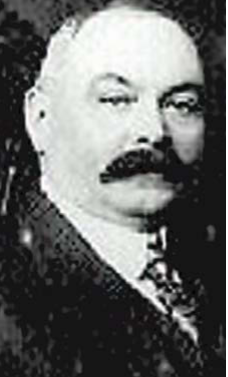
The tale is told that an Italian immigrant rejected some sound advice and, with a borrowed shovel dug 24 feet into the sandy loam of what was known as the Cucamonga Desert where he found something more valuable than gold.
And by the time Secondo Guasti died in 1927, he had transformed Southern California in a way that few other Californians ever had – or ever will.
Born 155 years ago this July and raised in the winemaking town of Asti (whose most famous export is the sparkling wine Asti Spumante) in the Piedmont region of Italy, Guasti frequently crossed the region on his way to Los Angeles after he immigrated in 1882 when he noticed that the Cucamonga Desert bore striking similarities to the Piedmont region – which is surrounded on three sides by the Swiss, Italian and French Alps and has the highest peaks and largest glaciers in Italy.
Discovering water What piqued Guasti’s interest in the region was the way the spring snow melts and creeks seemed to vanish beneath the surface of the land. Borrowing a shovel, Guasti burrowed about 24 feet into the ground and found what he had suspected: a massive underground lake, or aquifer.
While the first Mother Vineyard had been planted at the direction of Rancho Cucamonga owner Tiburcio Tapia in 1839, Guasti’s experience and upbringing (his father was a vintner) in Italy gave him valuable insights into winegrowing. He realized that eventually the grapevines would tap directly into the water table to reduce costly and timeconsuming irrigating.
Guasti’s idea worked. He organized the Italian Vineyard Company, purchased 8 square miles and planted what became more than 5,000 continuous acres pro ducing numerous varieties of premium non-irrigated wine grapes. Within a decade, Guasti transformed the Cucamonga Desert into a world-renowned wine growing region that produced more than 5 million gallons of wine as well as grape products such as vinegars, raisins and premium brandies.
Along the tracks of the Southern Pacific Railroad, Guasti built his first mansion, stone winery buildings, cooperages, narrow gauge rail lines and an entire village to house his managers and seasonal workers with a company store and fire house.
More importantly, as the Italian Vineyard Company attracted winemaking professionals from Italy and since the bulk of his seasonal workers hailed from Mexico, Guasti saw to their spiritual needs with the construction of San Secondo d’Asti Catholic Church – a replica of Guasti’s 17th Century home church in Asti.
Successful vineyards By America’s entry into World War I, the Guasti vineyards were the largest in the world.
In 1910, to celebrate his success, Guasti built one of Los Angeles’ earliest classic mansions at 3500 W.
Adams Blvd – which was later owned by director Busby Berkley.
Many of Guasti’s potential investors first scoffed when he suggested growing grapes in a desert. Guasti came to America a penniless farm laborer, but he died celebrated as one of Los Angeles’ wealthiest and most respected citizens. His life served as a testament that sometimes the impossible really is possible.