Architect, shunning such conventions as right angles, opts for nature’s geometry.
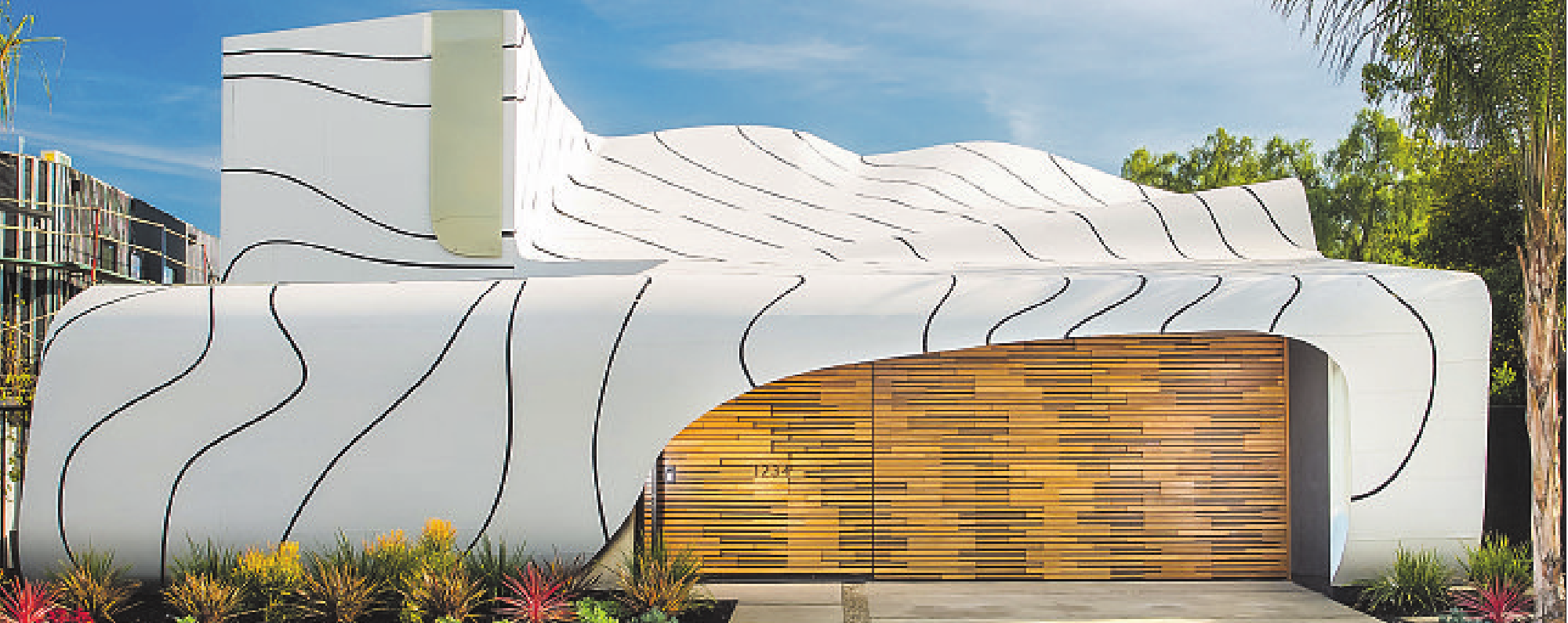
Consider the agitated envelope that sheathes Mario Romano’s latest Venice design: It resembles abedsheet shaken out, rippled by invisible currents, and then frozen in midair.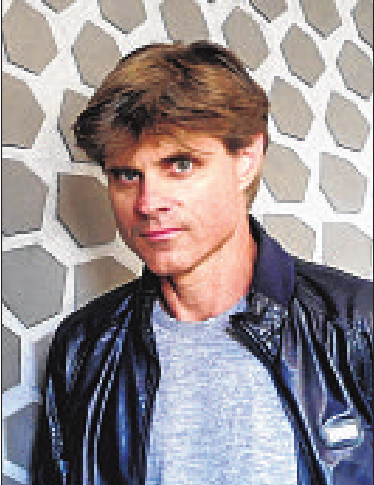
Romano’s 5,700-square-foot Wave House is a riff on water and air — in short, architectural biomimicry. The five-bedroom, four-bathroom home is listed for $5.717 million by Halton Pardee + Partners.
“The collision of art, technology, nature and science — it’s an exciting intersection for me,” said Romano, who launched his Santa Monica-based design and build firm in 2002, since building 14 projects in Venice and Santa Monica.
Romano is an adherent of parametricism, a design
style that eschews right angles, repetitive flatness, and what the
designerbuilder calls “authoritarian” boxlike structures. Instead,
nature’s intricate geometry is replicated — not the natural world’s
forms perse (a wave, a field of clouds) — but the behavior that those
forms exhibit.
Such
post-postmodern architecture is ascendant and includes such iconic
examples as Frank Gehry’s Walt Disney Concert Hall and the Broad museum,
designed by Diller Scofidio + Renfro.
Romano’s
goal is to scale such monumental designs down to residential size where
“a continuity and fluidity — a feeling of no beginning and no end” can
be more fully appreciated, he said.
Such circularity begins with more basic forms: machines powered by math.
To
create the 300 sheets of joined white aluminum that envelop the Wave
House, Romano, 48, employed computer numeric control technology. The
behavior of nature’s random forms (such as wave patterns) are distilled
into algorithms, or mathematical rule sets. Parameters are then tweaked
to create novel forms within a computer-aided design application.
Those
tailored forms are cut by Romano’s $100,000 computer numeric control
machine, which he terms “a low-level robot, like a 3-D printer.” The
strips are then affixed to a metal substructure. Romano continues the
biomimicry theme on courtyard walls covered with overlapping DuPont
Corian strips that resemble feathers.
Pitched
at 30 degrees, the horizontal fins, as Romano calls them, help keep the
house cooler and drier because the siding easily sheds water and heat,
much like bird feathers.
“Nature
does things so efficiently, so why not copy it?” said Romano, a design
and construction autodidact who was born in Santa Monica and raised in
Brentwood.
Beyond a
9-foot center-pivot front door built from skateboard decks (a riff on
Venice beach culture), 10 walls are covered in textured Corian that
mimic such non-repeating patterns as flocks of birds, palm fronds and
the hides of giraffes and tortoises.
“The
walls get charged by light that shifts throughout the day, carving
shadows,” Romano said. “They’re very sensual — you want to touch them.”
It’s
easy to see why Romano describes his homes as “performance-based.” Two
other Romano homes under construction in Venice are equally theatrical:
one enveloped with black aluminum fins pitched in vertical rows, the
other clad in more than1,000 pieces of brushed aluminum that cascade in
ripples over the home’s roof and down the side.
Romano
terms his protean design approach as a “breakout language,” and indeed,
his tendentious homes are talked about, both with admiration and
reserve.
“You’ll never
find one house that everybody will love,” said listing agent Nancy
Osborne of Halton Pardee + Partners. But they’ve been popular on the
Westside, an area clustered with hightech firms. “These buyers want to
live in homes that reflect who they are. They want to live in art.”
hotproperty@latimes.com


