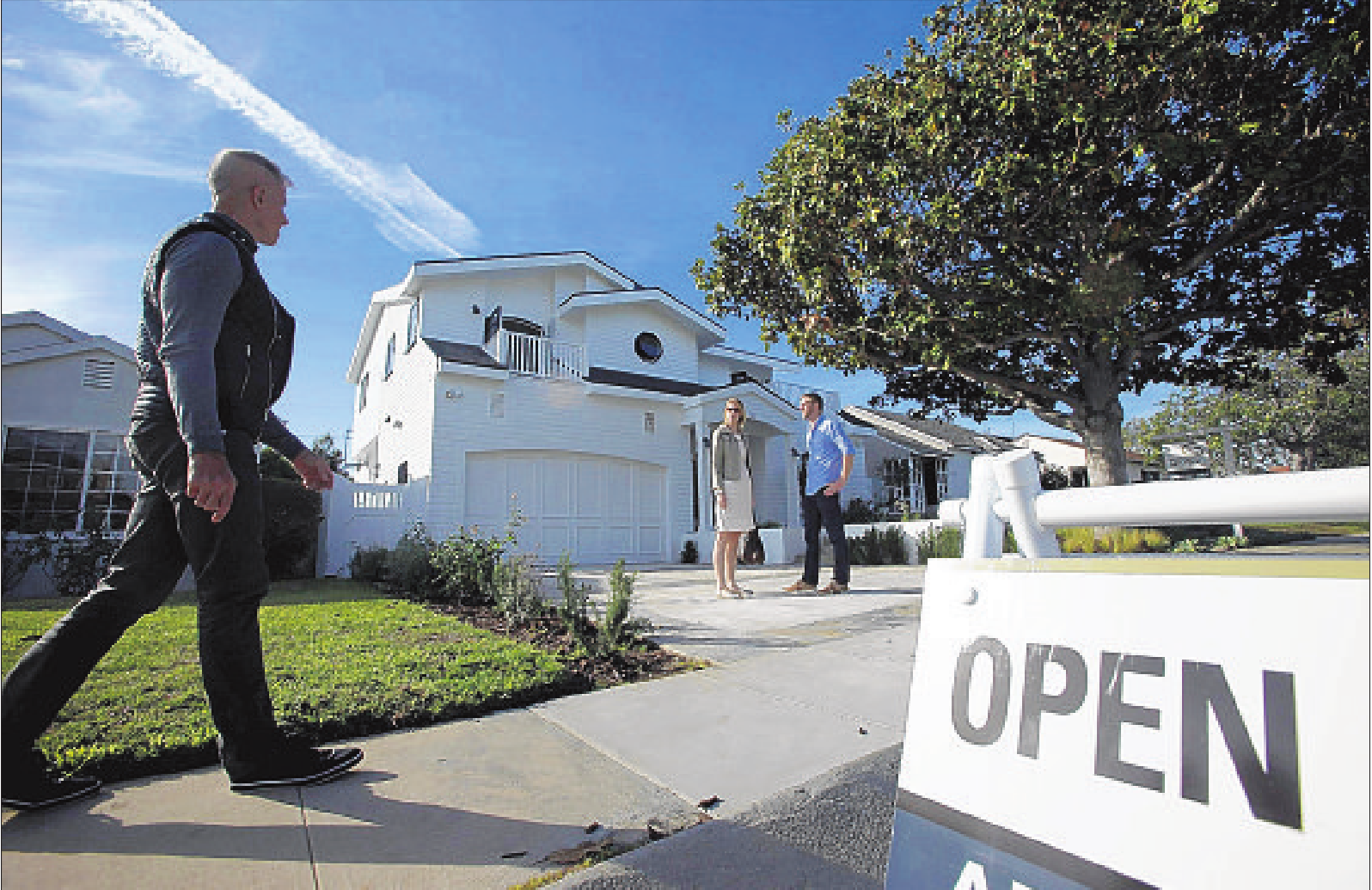
Tidy homes in proximity to Silicon Beach make for an idyllic suburban oasis.
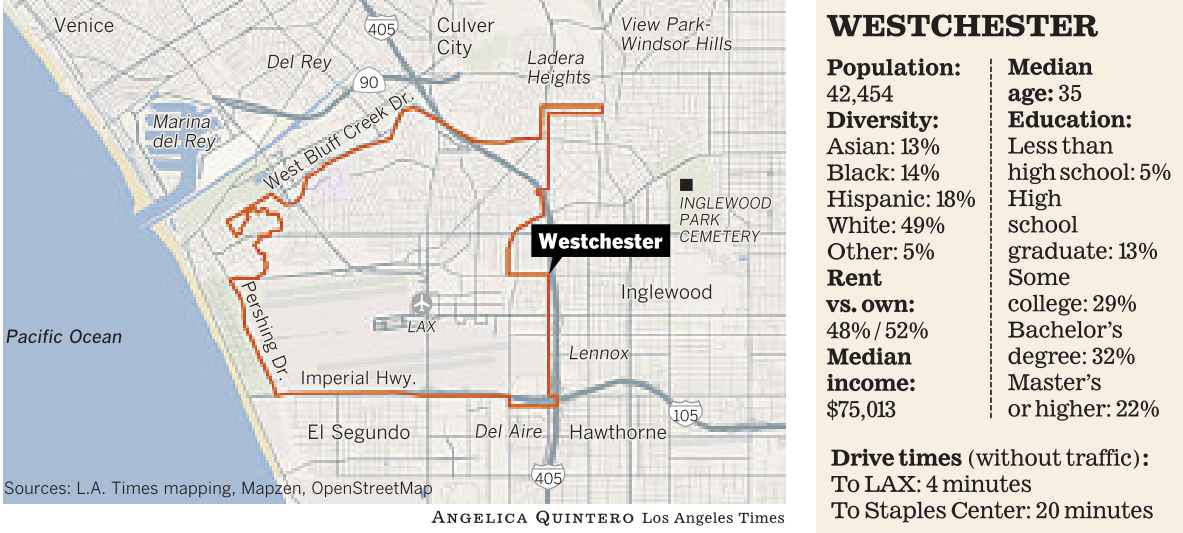
Surrounded by bluffs, the ocean,the 405Freewayand LAX, Westchester startedout as a windswept plain in aremotecorner of the Los Angeles basin.
Its evolution into the siteofa vast planned community—and a center of the aviation industry—is in many ways the tale of one ambitious developerand his industrydefining approachtobuilding suburban homes.
That developerwas Fritz Burns, arealestateman whocame to L.A. in the 1920sand set about subdividing land in and around Playa del Rey.His success convinced him to buy out his employers, but his timing waspoor: The Great Depressionstruck and wiped him out.
Forthe next fewyears he led a nearly penniless existence, camping outonabeachbeneath the bluffsuponwhichhehad once lived in agrand mansion. Afortuitous investmentinararespeculativeoil field allowedhim to get back intothe buildinggame, and he wasted no time developing tracts in West Los Angeles and the San Fernando Valley.
Two factors combined to bring him back to the plains above his old Playa del Rey stomping grounds: The Federal Housing Authoritycreated aprogram to encouragefirst-time home buyers and, moreimportantly,the aviation industrybegan to achieve critical mass in Southern California.
Howard Hughes had set up his aviation business in the flats below the bluffs, while Douglas Aircraft and othermanufacturers had begun to cluster near Mines Field, the city’snewly christened municipal airfield. The industrywas thriving, but the remote plateau wasstill mostly undevelopedbean fields.
The industryneeded homes for its workers.Burns obliged, constructing anew tract, whichhe dubbed Westchester,tohouse
them. World WarIIsaw the demand for worker housingskyrocket, and the
small suburbgrew, seeminglyovernight, intoamassive planned
communityof10,000 people.
Postwar,
the area boomed again as returning vets bought homes near the factories
that now churned out passengerplanes instead of bombers, and tiny Mines
Fieldgrew intomightyLos Angeles International Airport.
To
meet the demand, Burns,
nowpresidentofKaiserCommunityHomes,developedprefabrication technologies
to build homes faster and morecheaply. The components Kaiser built in
its Westchester factorywouldhelp fuel the rapid suburbanization of Southern California, changing the way millions of people lived.
Westchester
itself peaked at 30,000 residents before the introduction of noisy
jetliners and an expansion of LAX led to the condemnation and demolition
of blocks upon blocks of the old neighborhood.
Its
resurgence comes as the tech industry, which is centered on the
Westside, faces the same challenge that the aviation industry once did:
There just aren’t enough houses for workers.
But
for the lucky few who can afford it, Fritz Burns left behind an idyllic
neighborhood, which harkens back to the day when everyone with a decent
job could expect to buy a home in L.A.
Neighborhood highlights Asuburban
oasis: The gently curving streets, tidy homes and well-manicured lawns
of Westchester create a small-town feel just a mile or so from busy LAX.
Techie
utopia: Proximity to tech hubs in Venice, Playa Vista, Culver City and
El Segundo make Westchester an appealing homebuying destination for
technology workers.
Neighborhood challenges
World’s noisiest neighbor: LAX is an important economic engine, but its many expansions have eaten into the neighborhood, and noise is a constant concern.
Expert insight Bob
Waldron, a Realtor at Coldwell Banker Residential Brokerage’s
Westchester/Playa Vista office, grew up in Westchester and has been
selling real estate there for 45 years.
“Playa
Vista and let’s call it Silicon Beach have really benefited the
Westchester area,” he said. “We get a lot of people who potentially
might want to reside north of us or south of us, but based on
affordability they go, ‘You know, Westchester is a wonderful community and it’s more affordable,’ which has really accelerated the values here.”
The
neighborhood has become especially popular among young couples and
families buying their first single-family home, Waldron said. He noted
that homes in Westchester tend to be more expensive the farther away
they are from LAX, and the closer they are to the ocean.
Market snapshot In
the 90045 ZIP Code, based on 17 sales, the median sales price for
single-family homes in April was $1.21 million, according to CoreLogic.
That was a 27% increase in median price compared with the same month last year.
Report card There
are more than a dozen public, private and charter schools within the
boundaries of Westchester. Among them is Open Charter Magnet, which
scored 917 out of 1,000 in the 2013 Academic Performance Index.
Kentwood
Elementary scored 892, Paseo del Rey Fundamental had a score of 864 and
Cowan Avenue Elementary scored 829. Orville Wright Middle scored 737
and WESM Health/Sports Medicine, a magnet high school, had a score of
704.
hotproperty@latimes.com