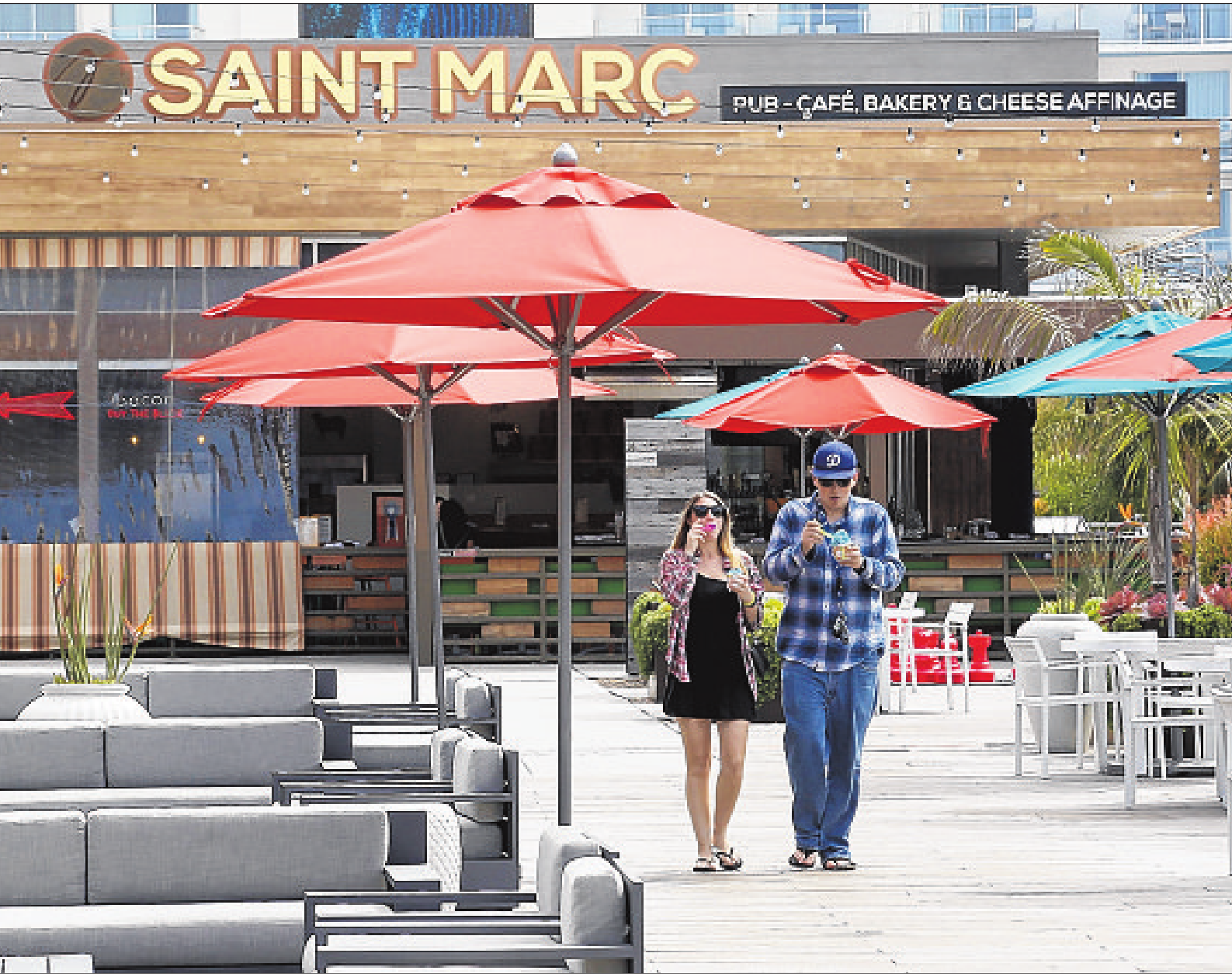
Regulations and locals can make it more difficult for new residential projects.
Few residential properties are as desirable as Southland surf and turf, or as difficult to develop.
In the ocean-hugging communities stretching from Malibu to Dana Point, builders face intense demand for limited space, resistance from regulators and residents, and logistical and environmental challenges.
“This will always be some of the most coveted real estate in California,” said William A. Witte, chief executive of real estate company Related California. “Because of that supply and demand imbalance, the cost of land has escalated significantly.”
Still, some seaside areas are undergoing bursts of activity.
Playa Vista — home to offices for Facebook, Google and Microsoft — has new residential units for sale in the Runway mixed-use complex as well as dozens of condos in the Seabluff project set to be completed in 2018.
In Marina del Rey, developer AMLI is wrapping up construction on 585 residential units. The $165- million development, which broke ground two years ago and is designed to look like a boathouse, also features outdoor areas and a retail component.
In San Pedro, the first of 676 single-family homes, condos, flats and town houses in the Highpark housing plan is slated for completion this year, with the rest set to be finished by 2021. Initial plans to build 2,300 homes quickly met with controversy and were scaled back.
Huntington Beach is particularly busy. The Pacific City complex broke ground in the fall after a fraught, decades-long development process and this year began welcoming tenants into the first of its 516 luxury units. The residences, marketed as “classic Southern California beach living,” are part of a retail and hospitality project spread across 31 acres and three developers.
Developer
Signal Landmark wants to build 36 town homes at its Windward project.
The site for Shea Homes’ Parkside Estates, which will feature 111
single-family homes, is undergoing grading and infrastructure
installation. Near the Bella Terra mall, the 510 dwellings of Pedigo
Products’ Monogram Apartments plan are halfway through construction.
Several
more projects — mixed use, town homes, single-family homes — are also
in the works in Huntington Beach. Many plans include provisions for
habitat preservation and parks.
Because
of the higher cost to live by the beach, such properties are bought
more often by wealthy baby boomers looking for retirement residences and
second homes. Around Santa Monica and Venice, the tech industry is
attracting an influx of young professionals hoping to participate in the
start-up scene.
But
there’s not much room to grow. Often, only luxury developers are able
work out profitable margins, and then only by pairing with the
government or by crafting mixed-use proposals that combine residential
units with retail and entertainment options.
“Affordable housing by and large is not economically viable on expensive land,” said Stuart A.
Gabriel, director of the Ziman Real Estate Center at UCLA.
Winning
government permission is also difficult. The California Coastal
Commission has purview over oceanside development, and developers said
the agency tends to favor projects that are open to the public — such as
hotels and retail outlets — over private residential buildouts.
Approvals, always difficult to get, are even more of a struggle now, Witte said.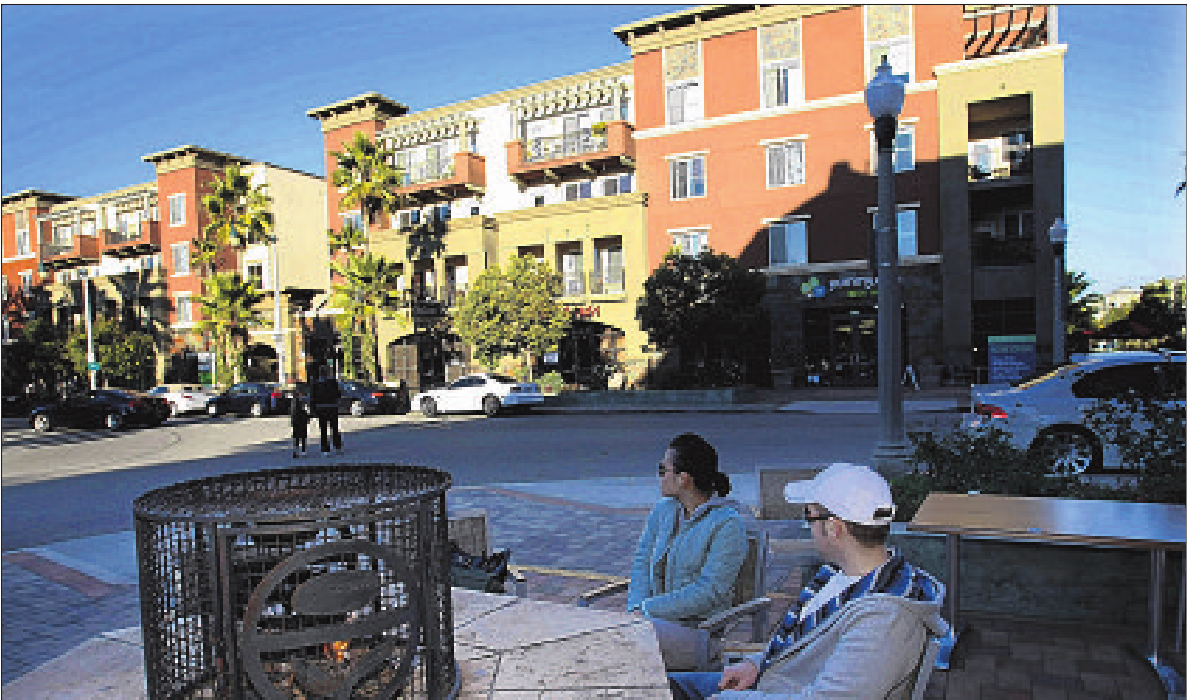
Related
California wrapped its most recent Southern California coastal project
three years ago in Santa Monica, with help from the city. The Ocean
Avenue South complex — the first to be built on Ocean Avenue in more
than two decades — features condos and rental units.
“It was a hugely successful public-private partnership, but it was also unique and difficult to replicate,” Witte said.
Many
coastal residents are development shy, resisting construction larger
than a small cluster of homes and raising concerns about traffic
congestion and building density. Add in environmentally sensitive marine
and onshore habitats, and likelihood of resident-developer clashes
rises.
In Newport
Beach, the proposed 900-home Banning Ranch mixed-use development
continues to hang in limbo after years of being embroiled in
controversy.
The state Supreme Court in
March ordered builder Newport Banning Ranch to amend its environmental
impact report before continuing the project. And the company sued the
Coastal Commission after the agency denied the developer’s latest plan
in September.
“Banning
Ranch is one of the last large, privately owned and undeveloped coastal
parcels,” said Terry Welsh, president of Banning Ranch Conservancy, an
environmental nonprofit that brought the case and hopes to preserve the
property by purchasing it outright. “There are just no more really big
lots left.”
Increasingly,
constituents are also concerned about climate change and its effects on
the coastline. Building sites in Florida and New York already feature
safeguards against the effect of global warming and coastal erosion —
Southern California construction could soon follow suit.
hotproperty@latimes.com


