Its shift from producing tires to a diverse economic base keeps income flowing.
The discovery of oil in the 1890s, followed by Henry Ford’s decision to open an auto plant in the Los Angeles area in 1914, kicked off Southern California’s rapid ascent as a major manufacturing hub.
Cars, tires and petroleum products of every type were just the beginning. Many of the goods that came to define modernity in the 20th century were produced in and around L.A., including the airplanes that helped win a world war and the rockets that would, for atime, make America the world’s greatest space-faring nation.
Much of this manufacturing, and especially the production of cars and tires, was focused in the Central Manufacturing District, a vast megaplex of warehouses and factories on the banks of the L.A. River to the south and east of the city.
There, goods rolled off assembly lines and were loaded onto trains bound for domestic markets to the east and north, and to the twin ports of Long Beach and Los Angeles for shipping to consumers around the world.
By the 1960s, business interests in the unincorporated areas of the CMD began to turn a leery eye toward L.A. which, along with other surrounding cities, had begun to make plans to annex the manufacturing districts to expand their tax bases.
To avoid that fate, the residents and business owners of an area surrounding a key rail yard and a bustling Chrysler plant, taking a page from the recently established City of Industry, voted to incorporate as the independent city of Commerce.
From the perspective of the citizens of the new burg, the benefits of this move were twofold.
First, zoning decisions would be made locally, ensuring that nosy big-city bureaucrats concerned about the effects of pollution were prevented from imposing onerous restrictions.
Second,
the new city got to set its own tax rates and keep the proceeds within
the city limits. That became a huge benefit for the residents of
Commerce. The city used its largesse to build a massive swimming
complex, to assist the elderly by providing a rent stipend and even to
establish a residentsonly resort near Lake Arrowhead.
As
L.A. began to deindustrialize in the 1970s, Commerce was able to
successfully navigate the transition from tire-manufacturing center to a
more diverse economic base. One of the city’s defunct tire factories,
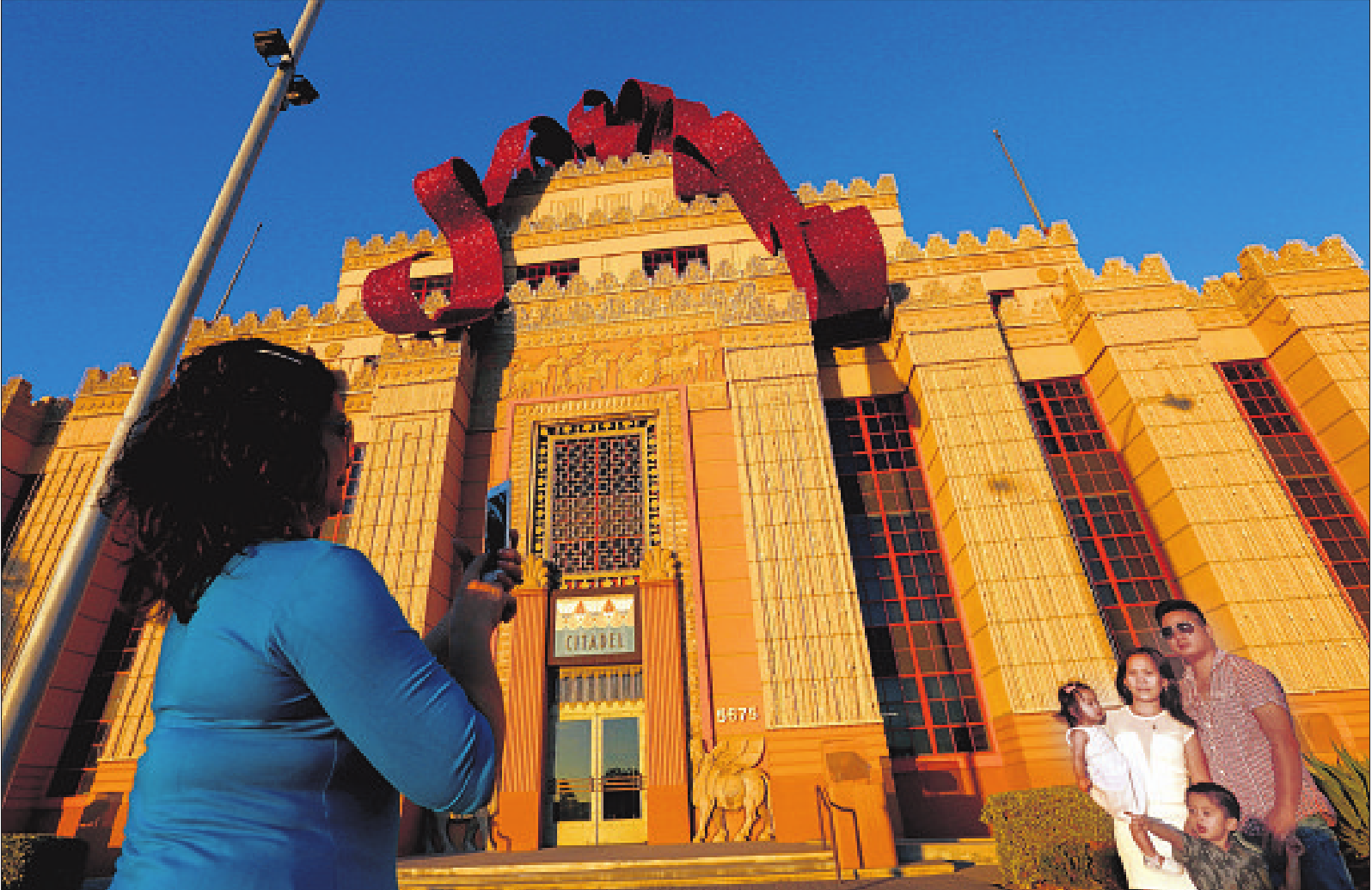
the Assyrianthemed Sampson Tire Co., was transformed into a thriving
outlet mall, and a casino and hotel provided another steady income stream.
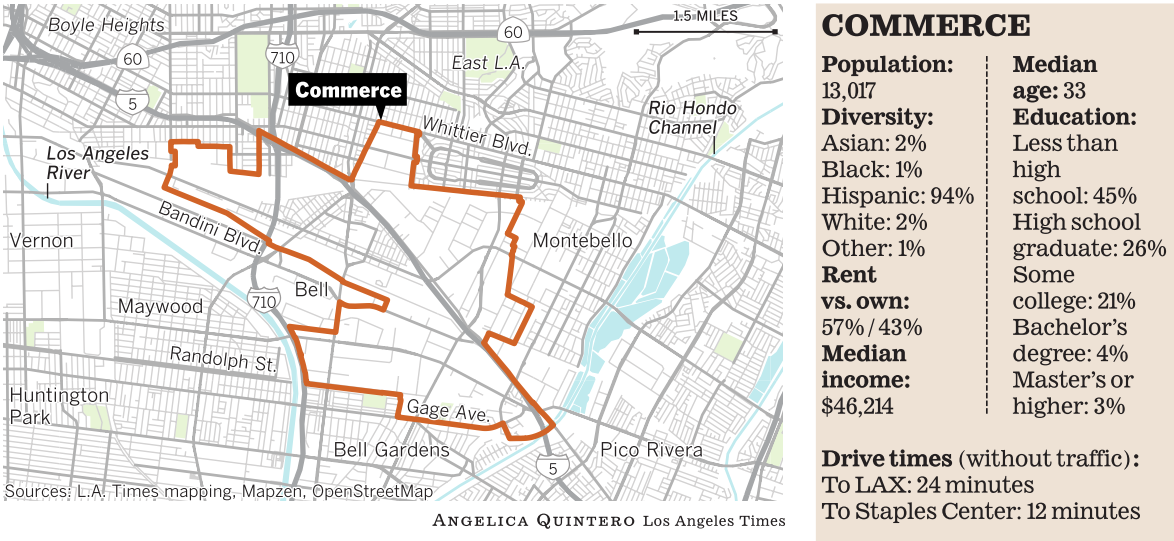
Neighborhood highlights Affordable homes: With most listings under $300,000, Commerce is one of SoCal’s easiest close-in markets to crack.
Shop ’til you drop: The outlet mall and its historic facade are a popular shopping destination for locals and visitors from around the world.
Know when to hold ’em: Poker aficionados can hone their bluffing skills at the city’s casino, which hosts popular pro tournaments throughout the year.
Neighborhood challenges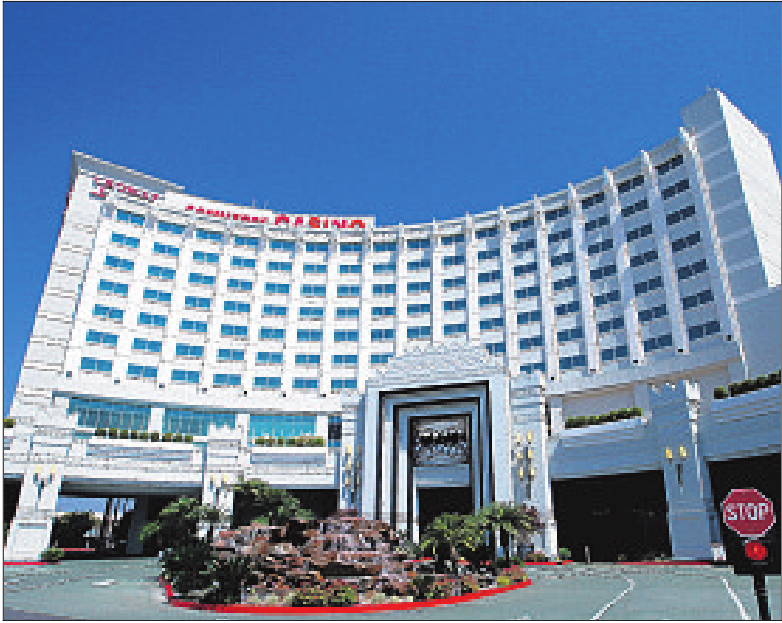
Afactory town: Living
in Commerce means dealing with the noise and pollution that come with
manufacturing, and constant train and truck traffic.
Expert insight Luther
Sanchez, a real estate agent with Century 21 All-stars in Pico Rivera,
grew up in Commerce and has a number of listings in the area.
“People in Commerce are very welcoming people, which is not common in a lot of places in Southern California,” Sanchez said.
“Relationships are formed because of the events and resources the city provides.”
Sanchez
said the community is made up of millennials who recently moved into
the area and residents who have lived in Commerce for generations,
creating “a very diverse community.”
Besides
an area called the Village that has newer, remodeled homes, Commerce is
made up mostly of small bungalow-style homes, he said.
Market snapshot In
the 90040 ZIP Code, based on five sales, the median sales price for
single-family homes in May was $428,000, according to CoreLogic.
That was a 18.8% decrease in median price year over year.
Report card Within
the boundaries of Commerce are Bandini Elementary and Rosewood Park,
which scored 779 and 724, respectively, in the 2013 Academic Performance
Index. Nearby schools include Suva Intermediate, which scored 738, and
Montebello Intermediate, which had a score of 726. James A. Garfield
Senior High had a score of 714. Bell Gardens High had a score of 704.
Times staff writer Rachel Spacek contributed to this report. hotproperty@latimes.com


