Music lovers in 2014 will be commemorating many musical anniversaries – from 1959’s “the day the music died” through the 50th anniversary of Beatlemania to the first disco radio station. This year will keep music writers busy digging out old vinyl records for endless musical treks down memory lane.
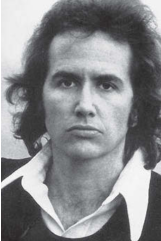
And one musical style that prides itself in flying under the cultural radar will celebrate its 45th anniversary as a cultural explosion that restated the simple virtues of America’s musical heritage at a time when the nation’s values were under assault more than at any time in history – and one of its most important statements had roots here in the foothills communities: John Stewart’s “California Bloodlines” album.
Despite The Byrds’ then-failed but now historic experiment with country western music in 1968’s “Sweetheart of the Rodeo,” by 1969 it had launched a movement then called country rock with the 1969 release of albums by Poco, The Flying Burrito Brothers, a new configuration of The Byrds and Bob Dylan’s “Nashville Skyline,” among others. Over time, the commercial aspects of the style evolved into today’s new country while providing a foundation for what is called Americana or alt-country.
The new music began with firm roots in the foothills communities: The Flying Burrito Brothers found
their steel guitar player Sneaky Pete Kleinow playing in an Ontario club
while Colton surf guitarist Jim Messina partnered with his Buffalo
Springfield bandmate Richie Furay to explore the twangy guitars and
rhythms of the unique Bakersfield country sound for Poco.
Yet
Stewart, who had grown up in Pomona, did more than simply put on a
rhinestone Nudie jacket and pay loving homage to the music of his youth.
Stewart recognized that California’s heritage and history were as much
country and western as Tennessee or Texas and used “California
Bloodlines” to reemphasize country music’s basic virtues of simplicity,
honesty and old-fashioned storytelling.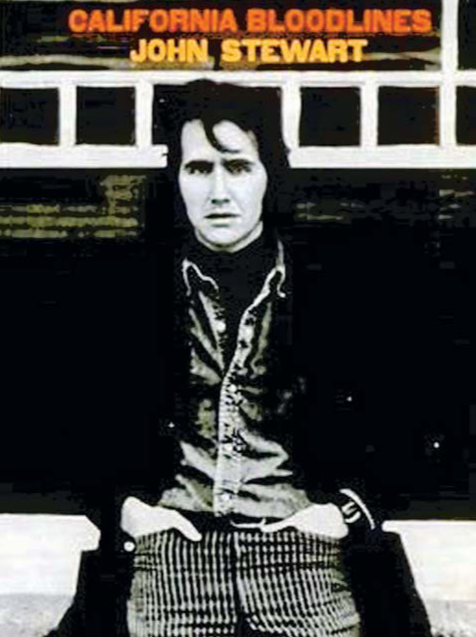
As
the 1950s evolved into the 1960s, the folk music boom began as the
popular hootenanny style and dominated the pop charts with bands such as
The Kingston Trio or The New Christy Minstrels before it split into the
politicized broadside faction of the early 1960s represented by artists
such as Dylan, Phil Ochs and Redlands’ Joan Baez. While Stewart’s roots
were firmly in the hootenanny school as a former member of the Kingston
Trio (and had even penned the megahit “Daydream Believer:
for
the Monkees); with “California Bloodlines,” Stewart followed Route 66
back to the America from which most Southern Californians had emigrated.
As music critic Thom Jurek pointed out, “California Bloodlines’’ songs
are “romantic vi sions of people and places that come out of a present
which is already in the past, and a past inhabited by ghosts” with songs
like “July, You’re a Woman” and “Missouri Birds.”
Yet,
one of Stewart’s biggest contributions was to remind America that
California was always part of the country/western experience when he
wrote “there’s California bloodlines in my heart/And a California
heartbeat in my soul.