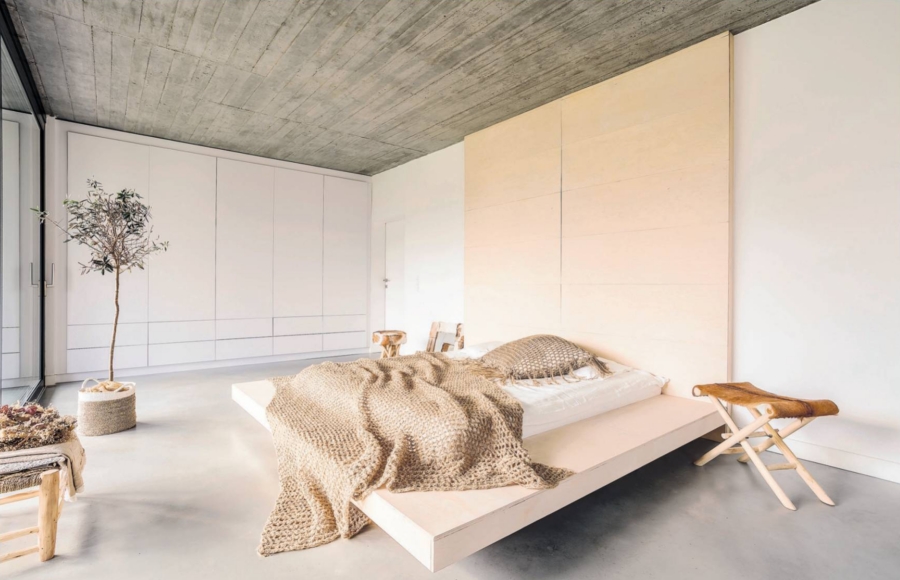
Minimalist design incorporates function, thematic elements and harmony.
Photo courtesy of
©Photographee.eu / Adobe Stock It's been a trying two years for homeowners. COVID-19 has compelled us to spend a lot more time at home and pay attention to all of our domicile’s interior imperfections.
While many of us have chosen the remodeling route to home improvement, others have embraced a more simplified strategy toward reimagining living spaces - the minimalist approach, which dictates that less is more.
David Erwin, a design consultant with North Carolina-headquartered Furnitureland South, explains that minimalism in interior design has roots that trace back to the early 20th century, particularly stemming from the Bauhaus movement.
“Minimalism in interior design is typified by the use of simple forms, functionality, and a degree of austerity and decoration so that the architectural space is preeminent - not so much the things within that space.
However, items in the space should have the same essential aesthetic, resulting in an almost Zen-like atmosphere,” says Erwin.
The minimalist vibe is increasingly popular in these stressful times. “People are worried about emotional well-being, and minimalist designs make people feel better. It reflects on simpler times, creates a calming space, and gets rid of what’s useless,” explains Marco Bizzley, a certified interior designer in San Francisco.
To capture a minimalist design, it’s important to focus on function. Consider what you want to use a particular room for. “Try rearranging your furniture so that when you move through your space each piece feels like it has a sculptural quality,” says Erwin.
“Choose neutral-colored walls with light-colored flooring,” Bizzley continues, “and bring in as much natural light as possible, which can also be helped by using mirrors.”
In addition, keep clutter at bay.
Aim to remove unnecessary items to achieve a minimalist look. “Throw out or store anything that doesn’t add functionality to the room.
Use a few decorations and choose one area you love to enhance and build your decor around that,” Bizzley advises.
Ponder your storage needs, too. For example, think about using an ottoman with space for blankets, toys, and whatever else you need to hide.
Consider minimizing not just the objects in your home, but also the color palette; however, be aware that the minimalist aesthetic can appear cold if not done right.
“Its important to add warmth to your home by adding some warm colors, different shapes, and textiles, otherwise you may end up with your home feeling more like a hospital,” Bizzley adds.
CTW Features
Contact us with comments or questions at hotproperty@latimes.com


