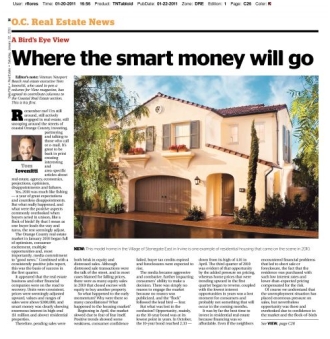
NEW: This model home in the Village of Stonegate East in Irvine is one example of residential housing that came on the scene in 2010.
A Bird’s Eye View
Where the smart money will go
 Editor’s note: Veteran Newport Beach real estate executive Tom Iovenitti, who used to pen a column for View magazine, has agreed to contribute columns to the Coastal Real Estate section. This is his first.
Remember me? I’m still around, still actively engaged in real estate, still snooping around the streets of coastal Orange County, investing, partnering and talking to those who call or e-mail. It’s great to be back in print creating interesting and area-specific articles about real estate, agency, economics, projections, optimism, disappointments and failures.
Yes, 2010 was much like fishing — a year of great expectations and countless disappointments. But what really happened, and what were the positive aspects commonly overlooked when buyers acted in unison, like a flock of birds? By that I mean as one buyer leads the way and turns, the rest seemingly adjust.
The Orange County real estate market in January 2010 began full of optimism, consumer excitement, multiple opportunities and, most importantly, media commitment to “good news.” Combined with a consistently positive jobs report, this was the basis of success in the first quarter.
It appeared that the real estate business and other financial companies were on the road to recovery. Units were consistent, prices were seemingly adjusted upward, values and ranges of sales were above $300,000, and smart money was clearly showing enormous interest in high-end ($1 million and above) residential properties.
Therefore, pending sales were both brisk in equity and distressed sales. Although distressed sale transactions were the talk of the street, and in most cases blamed for falling prices, there were as many equity sales in 2010 that closed escrow with equity to buy another property.
So what happened to the early momentum? Why were there so many cancellations? What happened to the housing market?
Beginning in April, the market slowed due to fear of fear itself. Positive trends showed some weakness, consumer confidence failed, buyer tax credits expired and foreclosures were expected to rise.
The media became aggressive and combative, further impacting consumers’ ability to make a decision. There was simply no reason to engage the market because no reason was publicized, and the “flock” followed the lead bird — fear.
But what was lost in the confusion? Opportunity, mainly, as the 10-year bond was at its lowest point in years. In October, the 10-year bond reached 2.33 — down from its high of 4.01 in April. The third quarter of 2010 was evident of that opportunity by the added pressure on pricing, whereas home prices that were trending upward in the first quarter began to reverse, coupled with the lowest interest opportunities in years was a lost moment for consumers and probably not something that will occur in the coming months.
It was by far the best time to invest in residential real estate because financing was so affordable. Even if the neighbors encountered financial problems that led to short sale or foreclosure, the fact that the residence was purchased with such low interest rates and lower-than-expected pricing compensated for the risk.
Of course we understand that the unemployment situation has placed enormous pressure on sales, but nevertheless opportunity was there and overlooked due to confidence in the market and the flock-of-birds
See VIEW, page C28