Continued from page C68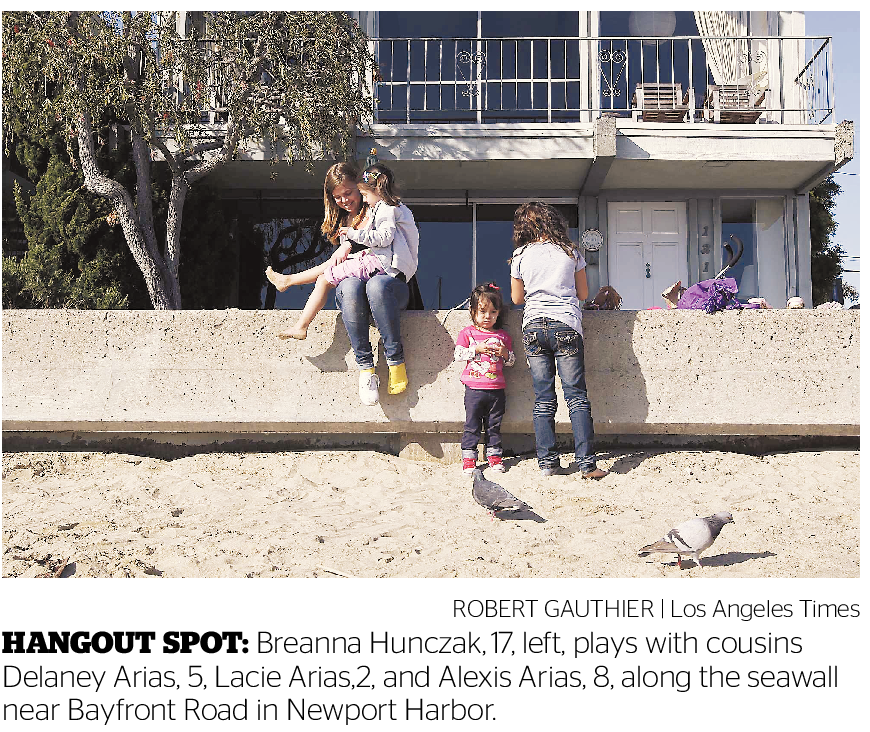
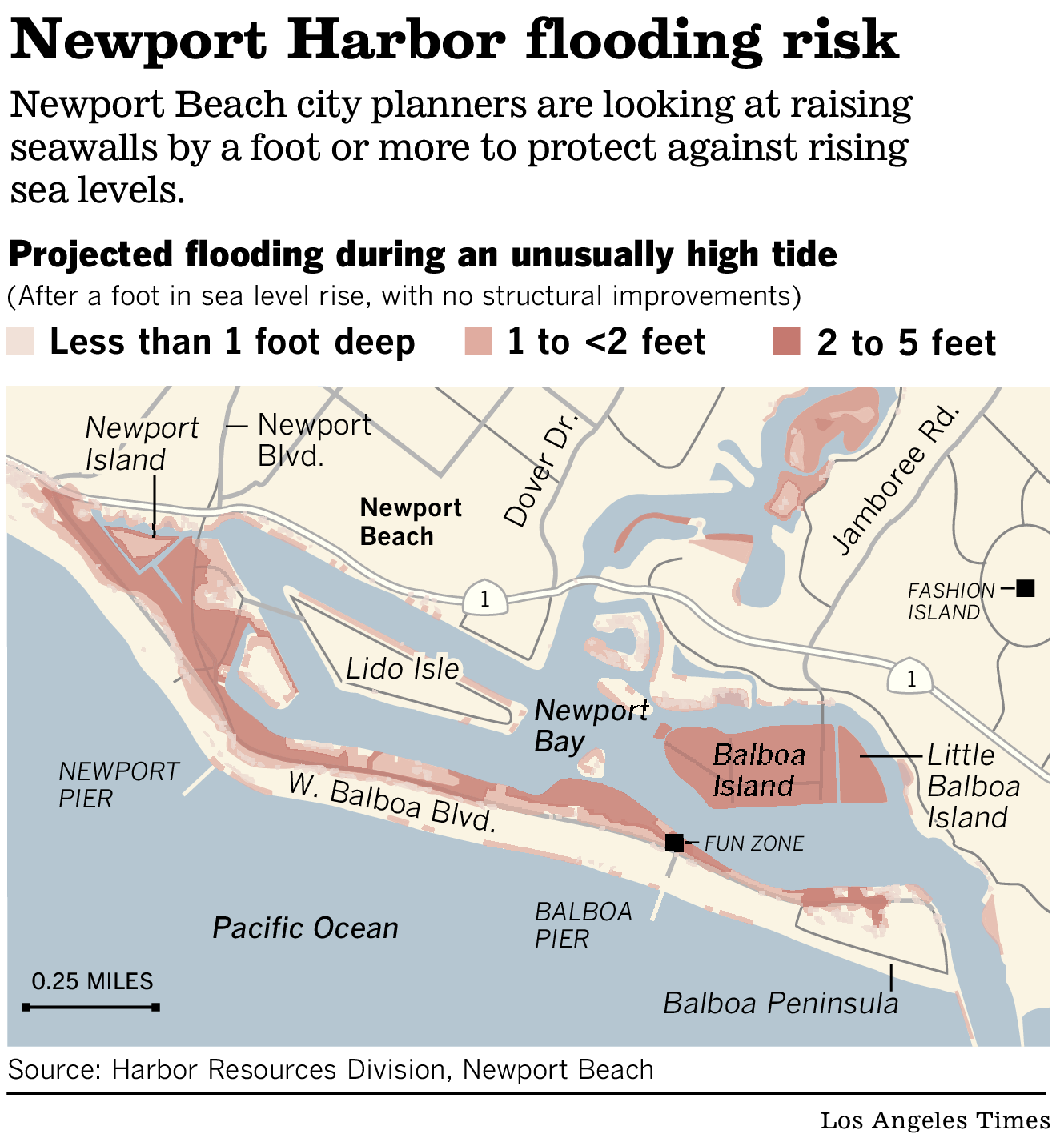
they will have to be raised.
Longtime residents point to eroding beaches and an increase in the number of unusually high tides over the years as evidence of a worsening problem.
In December, when a major storm hit during an extremely high tide, waves broke over the seawall and water pooled on sidewalks and streets. There was no serious damage to homes, but city workers had to pump the water back into the harbor.
Still, many islanders don’t believe in human-induced climate change and remain unconvinced that an encroaching sea is a pressing problem.
Seymour Beek, whose family operates the ferry that connects the island to Balboa Peninsula and lives in an island home his parents built in 1922, said the threat has been overblown.
“The projections,” he said, “I don’t trust any of them. There’s going to be plenty of time to cope if there is a significant amount of sea level rise.”
Others think the risk is more imminent.
John Corrough, a coastal planner and former city harbor commissioner who lives on the island’s south bayfront, said he would welcome the city raising the island’s defenses.
“I feel a real sense of urgency to begin planning for this right now. To me it’s irrelevant what the causes of global warming are. What we are dealing with is the reality that sea levels are rising.”
Mike Henn Newport Beach mayor
“We now have four generations that have lived a good chunk of their life on this piece of sand and their cousins and grandpas and uncles lived on the next piece of sand over,” Corrough said. “We’re counting on being able to continue this tradition into the future.”
Statewide, government officials are moving to prepare for the risks posed by the rising sea. Under a resolution to be considered Friday, the California Ocean Protection Council would direct state agencies to incorporate science-based sea level rise projections into all decisions, projects and regulations.
And like Newport Beach, some of the coastal communities at greatest risk of inundation are already going ahead with their own adaptation plans.
In the San Francisco Bay Area, where the threat is more acute because of a history of filling in and developing the bay, planners are thinking about elevating the Embarcadero seawall and raising the height of levees around the San Francisco and Oakland airports. A proposed development on Treasure Island would raise the elevation of the ground to place homes farther above sea level.
In Hayward, southeast of Oakland, rising sea levels are expected to overtake marshes along its 4-mile coastline and threaten its water treatment plant and industrial district within the next generation or two. Planners are searching for ways — and funds — to build up those wetlands as a buffer.
The city of Ventura broke ground last year on a “managed retreat” project designed to protect Surfers Point, a popular beach and surf spot, by moving a bike path and parking lot some 65 feet from the shore.
Newport Beach Councilwoman Nancy Gardner, who encountered resistance to the idea of adapting to climate change when elected four years ago, said she is proud of the progress the city has made. But she remains conscious of the limitations.
Funding for public works projects is scarce, and relocating structures out of harm’s way is an unlikely option in built-out Newport Beach, where homes with harbor views are worth several million dollars.
“We aren’t going to retreat — we’ve got so much invested in real estate,” Gardner said. “But the sooner we can start to think longterm, the more creative we can be in our solutions.”