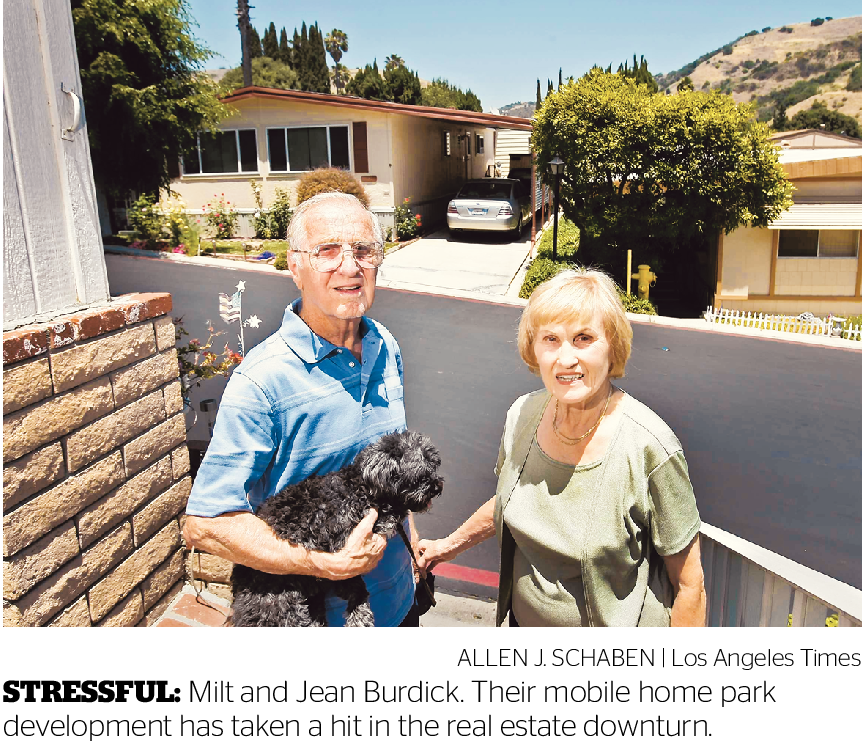
Couple has no debt, and their frugality has allowed them to save money. But their rent is mounting. A financial planner examines their situation.
FROM LATIMES.COM
Milt and Jean Burdick’s mobile home in Brea is tidy, comfortable and in a beautiful setting.
Like other homes in the mobile-home park in which they live, it looks out on the verdant parkland of Carbon Canyon. Roses tended by Jean bloom in profusion near their front door. And inside, a $20,000 renovation added granite kitchen counters, new carpets and double-paned windows.
But for the retired couple, the rising cost of rent for their lot space is a source of worry and tension.
“If I could, I’d walk away and live a more peaceful life,” Milt said.
Until this year, a long-term lease on the space held rental increases to 4% annually. But now that the lease has expired, the mobile-home park owner can, under California law, raise the rent every 90 days. And there is no cap on how much the increase can be.
In January, the Burdicks received a notice that their rent was being increased 9% as of April 1 from $948 to $1,032. If another notice comes this month, their rent could shoot up again in October.
“If you’re on a fixed income and you can’t fix your costs, it’s just too much risk,” said Alfred McIntosh, a fee-only certified financial planner in Los Angeles who examined the couple’s situation.
Milt, now 77, bought the used mobile home in 1998 for $32,000 in cash. He was twice divorced and had retired from a career as a mechanic in the airline and aerospace industries. Years after moving into the home, he met Jean, now 79, at a Parents Without Partners dance. He had three sons, and Jean, who was widowed, had five children. When Jean moved in with Milt, she sold her home in Torrance.
Milt and Jean married in 2003. Their combined income, primarily from Social Security and pensions, is now about $51,000 a year. Their savings amount to $312,000, spread among a checking account, a savings account and retirement accounts.
They own two cars, both of which were bought with cash. They have no credit card debt or any outstanding loans.
Utilities cost them nothing additional — electricity, water and gas service is included in their lotspace rent.
Their monthly expenses are not lavish. The couple estimated they spend about $200 on restaurant meals and about $300 on doctor visits and medications. Jean spends about $200 on hair, manicure and pedicure appointments.
They have a dog — a sweettempered, three-legged cockapoo named Smokey — that costs them about $150 a month.
For movies and hobbies, such as gardening, they spend about $50 a month, and during the summer months they attend free outdoor concerts. For vacations, they’ve generally gone on camping trips with friends.
They are so frugal that generally at the end of the year they have a $1,000-to-$5,000 surplus from their incomes, and that goes into their savings.
Their big splurge this year was to be a five-day trip to Hawaii in August. But primarily because of worry over increases in rent and what it might mean to their futures, they canceled it.
“It’s like being in quicksand,” Milt said. “You know you are sinking. You know there’s solid ground somewhere, but it ain’t in sight.”
Their fears were compounded by concerns that the mobilehome park might not be the best place for them as they age.
“What if one of us becomes disabled?” Milt asked. “We’ve gotta look at that. This park isn’t set up for that.”
They are not, however, ready to move into a retirement facility.
“What I’d like,” Jean said, “is to live in our own home.”
See COSTS, page C73


