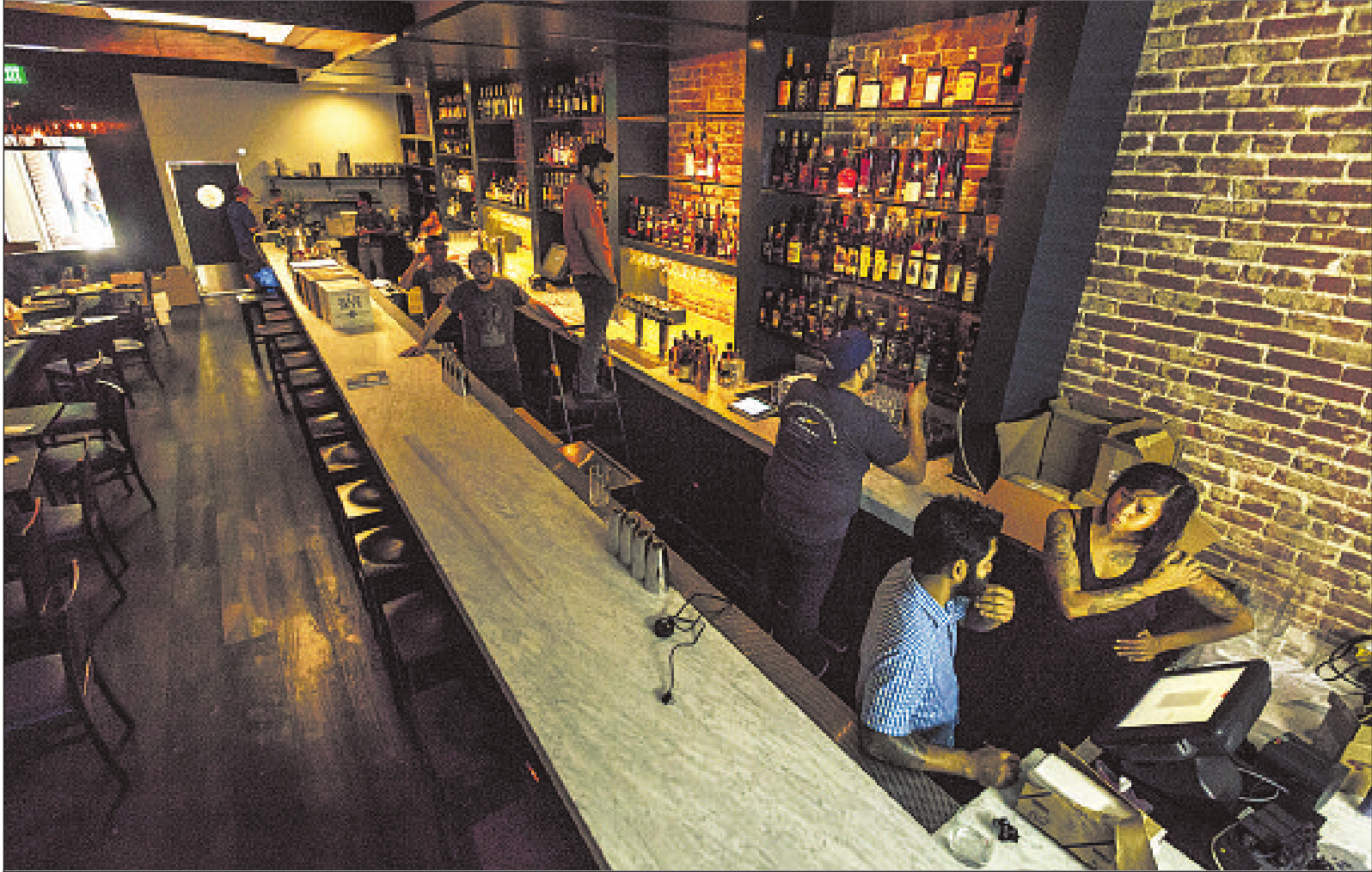
You can still, in certain haunts where old L.A. punks are known to gather, hear tales of the fabled late 1970s as experienced by the artists, writers and musicians who inhabited the strip of abandoned industrial land between Alameda Street and the river that became known as the Arts District.
On the one hand, the area offered squalid living conditions and the lack of amenities (aside from a few decent dive bars); on the other, there was the cheap rent and the freedom it created.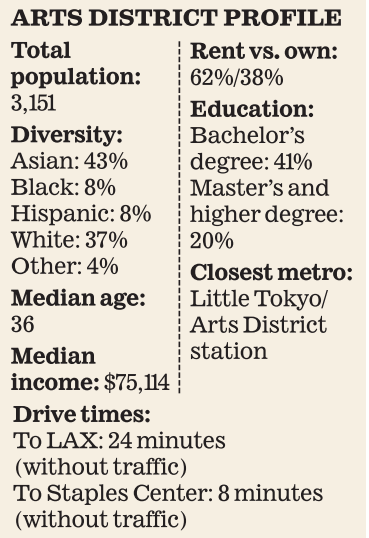
While the rest of the city was in full retreat from downtown, these artists took full advantage of a moment in time when the neighborhood was empty, aside from a few forlorn freight trains that still rattled down the narrow, winding streets.
Those Santa Fe Railroad trains had been trundling through the area since the late 1880s, first to export oranges from the city’s groves to the Midwest, and later to import people from the Midwest to live in the housing developments that replaced those groves.
Where Sci-Arc now stands was the Atchison, Topeka and Santa Fe Railway’s beautiful Moorishstyle La Grande Station, just one of the many structures the massive company built in and around downtown. But Union Station meant the end of La Grande, and the rise of interstate trucking combined with the dispersion of factories to cheaper locales to the south and east left the area nearly empty.
So, 30 years before the “downtown renaissance,” artists moved in and ironically set the stage for that still-unfolding phase of rapid gentrification and development by flouting the city’s 1922 mass rezoning of downtown as a commercial and industrial district. The city modified the zoning laws to accommodate them, and eventually developers came to recognize the potential for loft conversions and expanded retail space.
Now the old punk clubs are gone, but the galleries and artists are still there, as are cafes, restaurants and high-end shops. And, with the Gold Line nearby
and the ongoing construction of the Regional Connector Rail Line — which
will directly connect the Arts District with the Westside — passenger
rail has returned to the Alameda Street corridor once again.
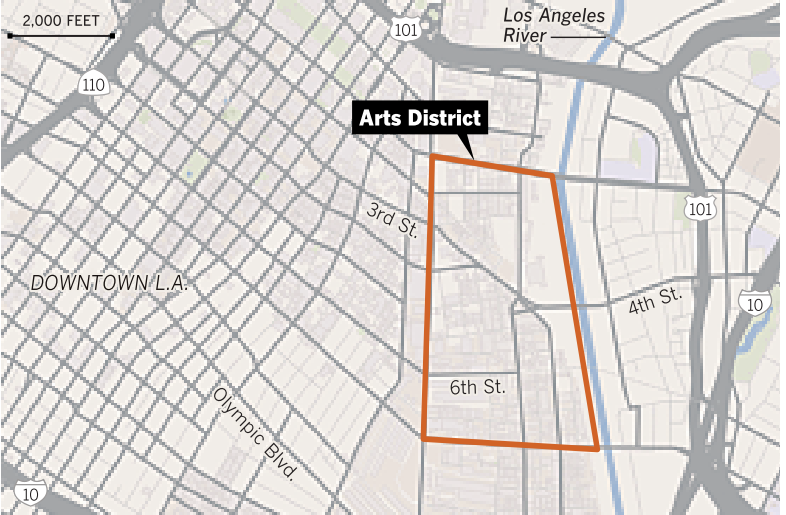
Neighborhood highlights Eat, drink, art: Along
with Traction Avenue, East 3rd Street is the epicenter of dining and
shopping in the north end of the district. There are galleries and indie
eateries aplenty, as well as outposts of Wurstkuche, Umami Burger and
Pie Hole, and locals and visitors commingle at the Angel City Brewery,
which has gallery space and a curated food truck
experience. At the southern end of the district, the area around 6th
Street and Mateo and Palmetto streets is rapidly becoming just as hot,
with suchmainstays as Villains now being joined by a new wave of cafes
and shops.
Sci-Arc: The
independent architectural school occupies the Santa Fe Railroad Freight
Depot, which underwent a highly successful adaptive reuse renovation in
2000. This striking quarter-mile-long building provided the impetus for
much of the new residential development nearby, including the massive
One Santa Fe complex across the street.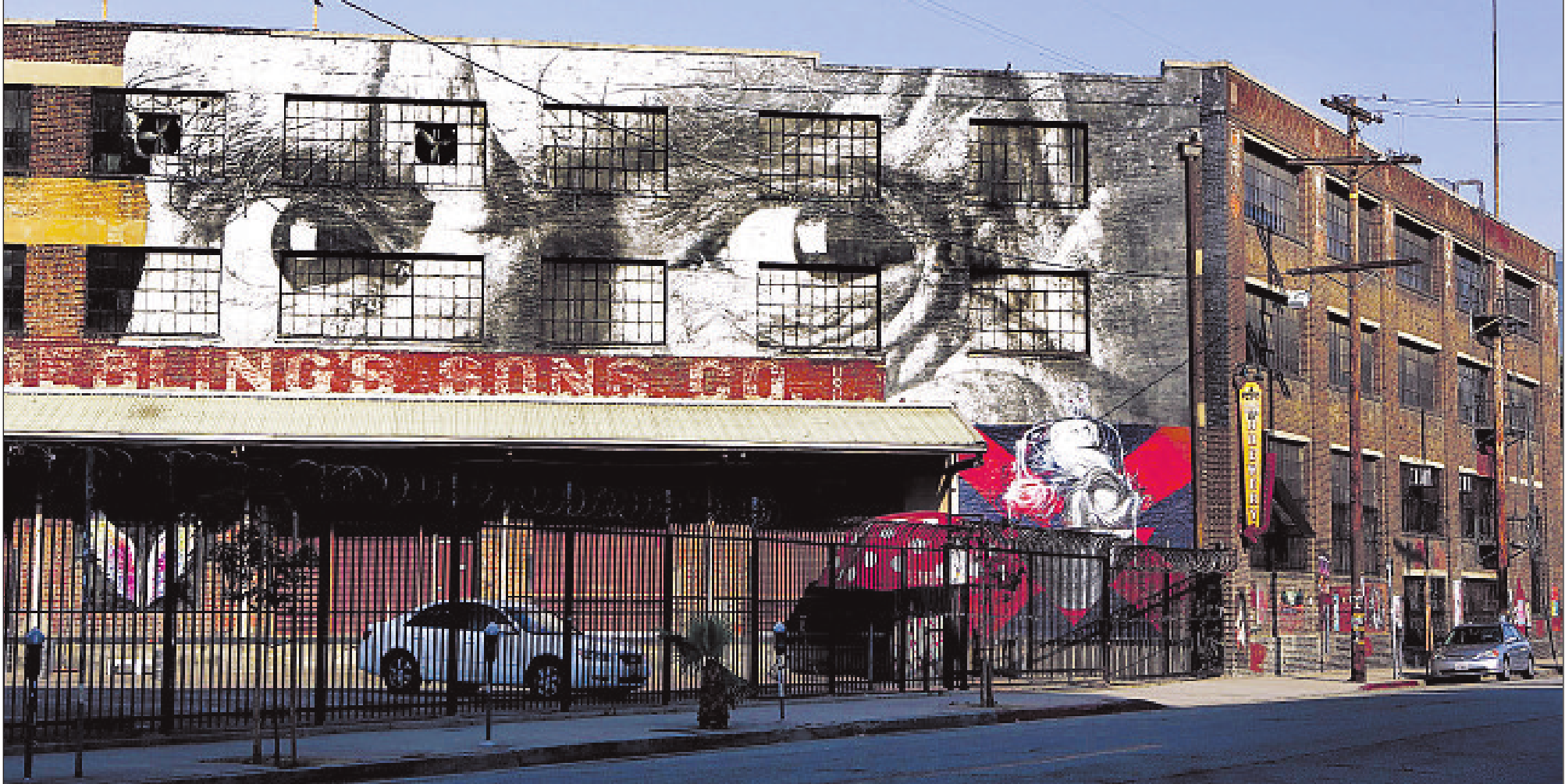
History: Though
little of the area’s agricultural roots remains, the warehouses and
loading docks of the industrial heyday are remarkably well-preserved and
give the neighborhood its distinctive feel. Buildings such as the Toy
Factory and H. Biscuit lofts remain relatively unchanged as seen from
the street, and narrow, curving roads trace the path of longgone train
tracks.
Expert insight For
prospective buyers looking for something unique, try buying in one of
the historic buildings that have been converted to lofts because there
are only a fixed number of them, said Michael Ferguson, chief executive
and founder of downtown L.A. real estate brokerage Loft Exchange.
“They
are a little harder to get into at first,” he said. “But eventually, as
we have seen in other parts of downtown L.A., new ground-up
developments will dominate the area, making units in these older
historic buildings that much rarer and more valuable.”
Neighborhood challenges
Affordability: It’s a familiar story. A cheap neighborhood becomes popular, and
suddenly rents skyrocket. For artists, it can be especially difficult to
afford market rents in a rapidly gentrifying area like the Arts
District.
Market snapshot In
January, based on 10 sales, the median price for condominiums in the
90013 ZIP Code was $664,000, according to CoreLogic. The median price
for condos in the 90012 ZIP code, based on four sales, was $551,000.
Report card Alliance
Dr. Olga Mohan High scored a 895 out of a possible 1,000 in the 2013
API ranking system. San Pedro Elementary earned a score of 809, Para Los
Ninos Middle scored 803 and California Academy for Liberal Studies
Early College High scored 794. Ramon C. Cortines School of Visual and
Performing Arts came in at 737.
hotproperty@latimes.com