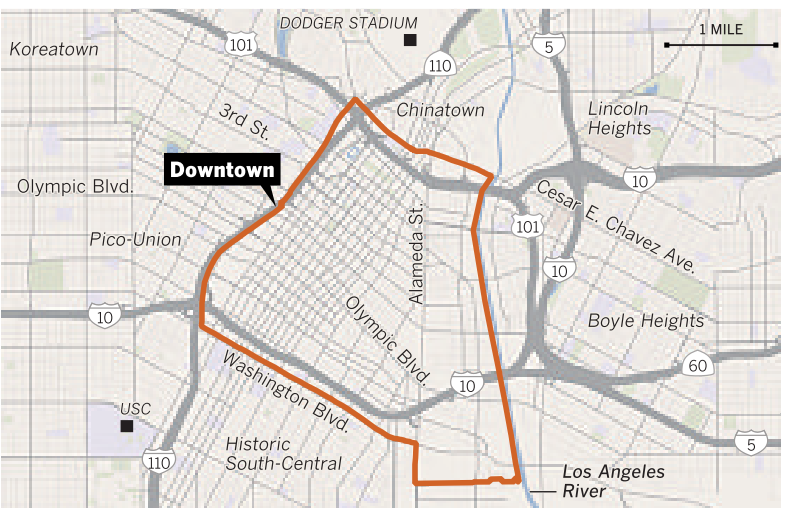
Downtown Los Angeles was once not only the center of the city, it was the entirety of it.
Before the city atomized itself and marched — first along the trails blazed by trolley lines and excursion trains, and later along a vast network of freeways — westward toward the sea, Victorian L.A. crouched in the lee of Bunker Hill, the acropolis where the wealthy lived.
The palaces of commerce that the early Angelenos built, and those that arose in successive waves of redevelopment through the 1920s and ’30s, formed the basis of the loft-conversion movement that brought residents back to downtown in this century.
What made that possible, ironically, was the postwar destruction of the Bunker Hill neighborhood to make way for new corporate towers that drew many of the remaining businesses out of the historic core and up the hill.
The resulting lower rents on the eastern edge of downtown had two positive, if completely unintended, effects: decades in which developers ignored the beautiful old buildings of the historic core, allowing the structures to escape the wrecking balls that wiped the western edge of DTLA clean, and the rise of a bustling retail district that catered to a large Latino population, especially in the Broadway corridor, where you can still find one of the city’s best selections of quinceañera dresses.
With many of the buildings in the historic core already converted to residential uses, the action in downtown has now moved south of 7th Street, where the South Park district hums with construction cranes.
There’s even a Whole Foods on Grand Avenue, something that would have been inconceivable just a few years ago.
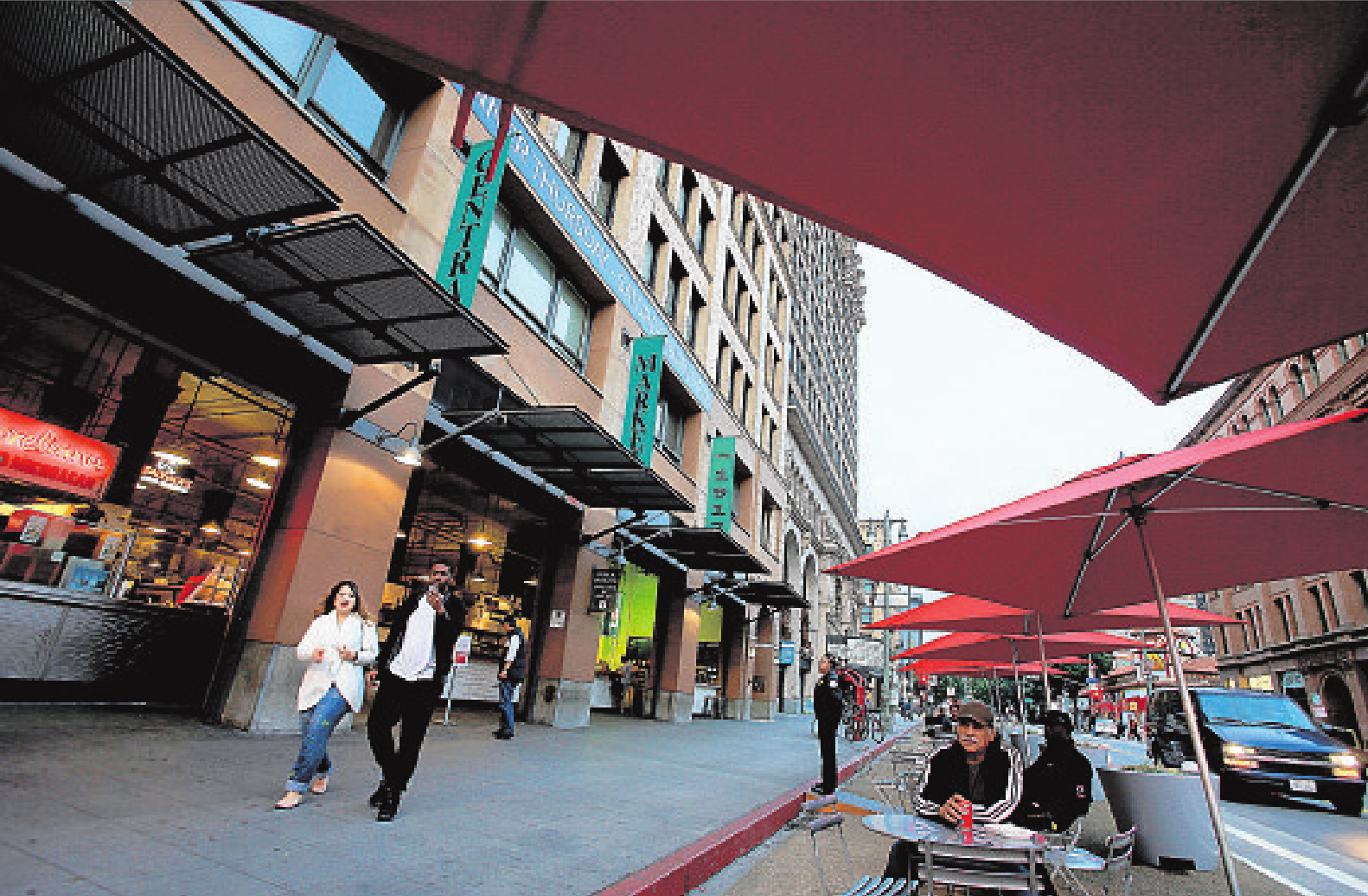
Neighborhood highlights Walkscore = 100: With everything from Grand Central Market to the Staples Center in walking distance and access to four Metro rail lines and Union Station, DTLA is one of the few places in the city you can live comfortably car-free.
Culture central: The
Broad, MOCA, Disney Hall, Dorothy Chandler Pavilion, Ahmanson Theatre,
live-music venues and special events almost every night make downtown
one of the premier centers of culture in the country.
Dinner and drinks: From
fine dining to food trucks, and dive bars to glitzy rooftop lounges,
there’s something for everyone when it comes to nightlife choices in
downtown.
History: All eras of L.A.’s past are represented downtown, from the days of the original pueblo, to the prewar city streets
that provided the backdrop to countless classics of film noir, and on to
today’s glassy modern metropolis.
Neighborhood challenges
Like
many L.A. neighborhoods, downtown is rapidly gentrifying, which puts
pressure on residents and businesses that may not be able to afford the
high rents that redevelopment brings.
Downtown,
which includes skid row, has a large homeless population that the city
has struggled with, though the mayor included $138 million for homeless
services in his latest budget proposal.
Expert advice “After
decades of forwardlooking urban planning and cycle time, this
confluence of events has taken place, where you have thousands of
residents, you have culture, you have dining, you have L.A. Live,” said
Arden Hearing, managing director of Trumark Urban; the company’s Ten50
building is one of the new condo towers sprouting up in South Park.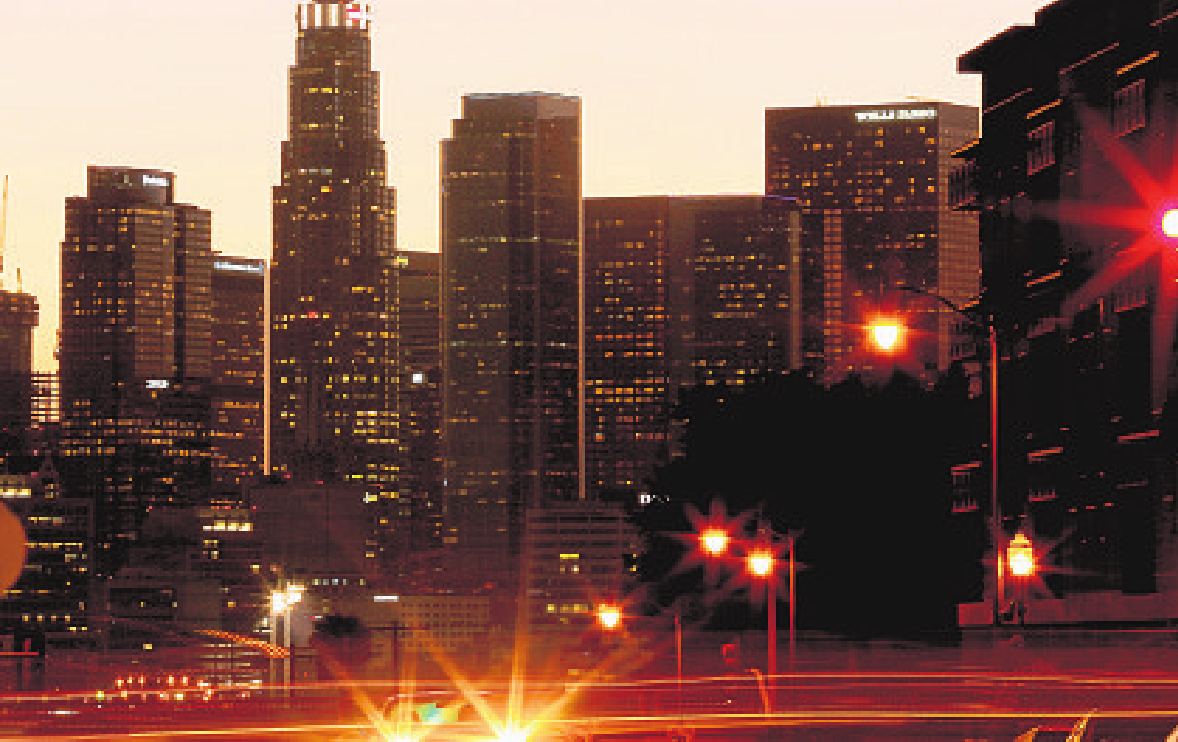
“You
have all of that with thousands of new residences and over half a
million jobs. You can live a full and thorough life there and never have
to leave.”
With downtown rents so high, it’s still a good time to buy, he said.
“The
market is on the upturn, and financing terms are still aggressive,” he
said. “There’s an opportunity now to buy into one of the hottest
submarkets in downtown.” Market snapshot Parts of the 90012, 90013, 90014, 90015 and 90017 ZIP Codes overlap the downtown area.
In March, based on 10 sales, the median price for condominiums in the 90012 ZIP was $510,000, according to CoreLogic.
In
the 90013 ZIP, the median price was $390,000 based on five sales; in
the 90014 ZIP, the median price was $685,000 based on three sales; and
in the 90015 ZIP, the median price was $888,000 based on eight sales.
There was one sale of $2.75 million in the 90017 ZIP.
Report card Alliance
Dr. Olga Mohan High topped the list with a score of 895 out of 1,000 in
the 2013 API ranking system. San Pedro Elementary and Para Los Ninos
Middle scored 809 and 803, respectively. Para Los Ninos Charter had a
score of 794 and Ramon C. Cortines School of the Visual and Performing
Arts scored 737.
Metropolitan Continuation scored 656; City of Angels scored 617; and Tri-C Community Day came in at 391.
hotproperty@latimes.com


