Food, transit and street life make it a good choice for those who enjoy going out.
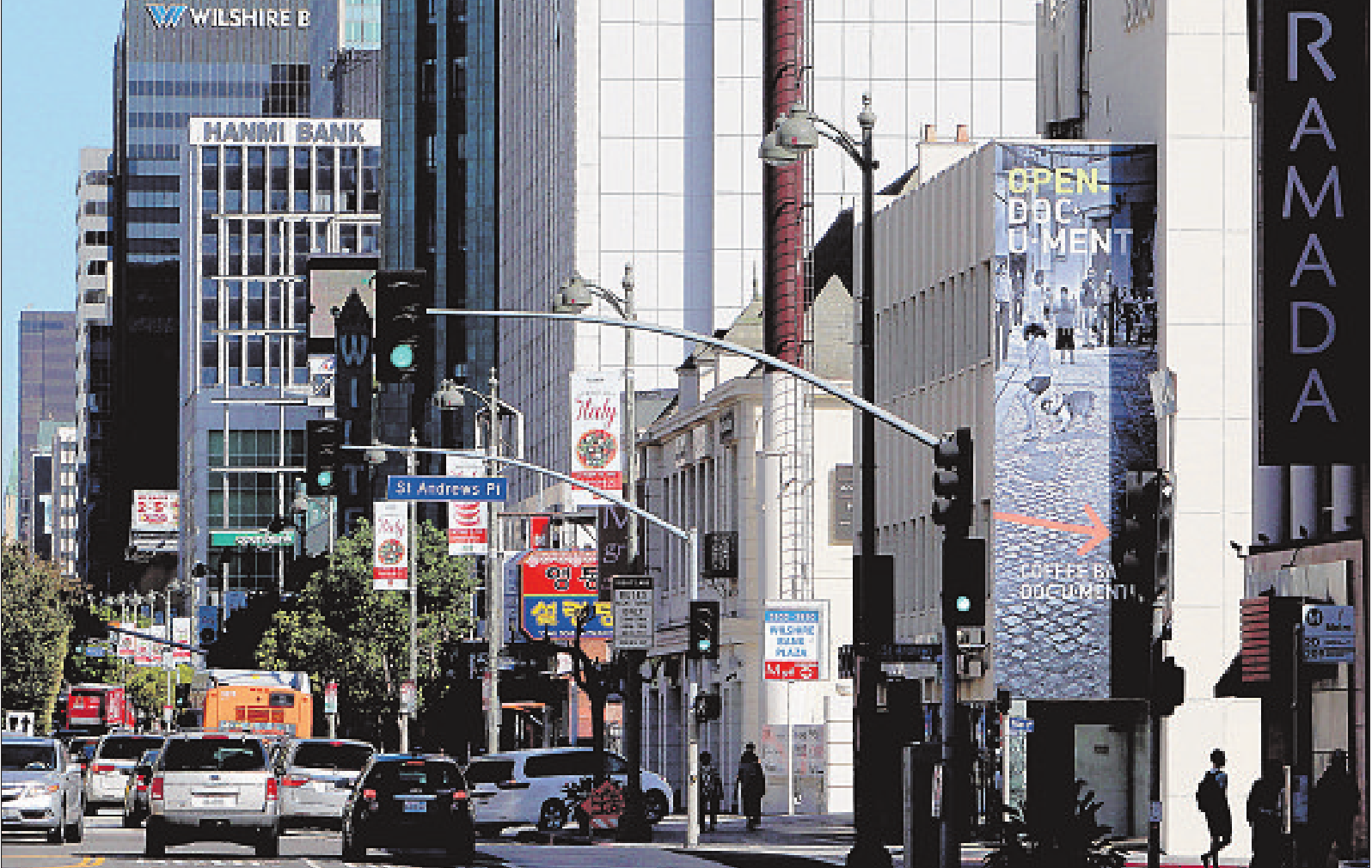
Dense, diverse and undeniably L.A., Koreatown today is a dizzying hub of all-you-can-eat barbecue spots, karaoke bars, highrise condos and 24-hour spas.
In the 1920s and 1930s, though, the neighborhood was the stomping grounds of cravat-sporting men and of women who wore their diamond rings over the fingers of their elbow-length satin gloves. These high-society folks would guzzle Champagne by the magnum and while away their days darting around town in their massive chauffeur-driven Duesenbergs.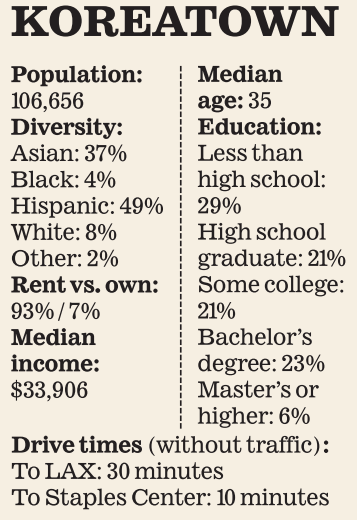
But the area has evolved beyond its days as a simulacrum of the Upper East Side into a vibrant, polyglot neighborhood that could exist only in L.A.
It all started with Wilshire Boulevard, which was built by Henry Gaylord Wilshire in the 1890s to connect his new luxury subdivision with the city. One selling point of his development was that streetcars were forbidden on the new road.
Wealthy Angelenos flocked to the area, building grand mansions on the boulevard, which now acted as a sort of gateway drug for Westside living, dragging the city’s center of gravity out of clamorous, trolley-clogged downtown and toward a future when the city limits would end on the shores of the Pacific Ocean.
With these well-heeled residents came doorman apartments and upscale shops and restaurants, and soon the area was dubbed the “Fifth Avenue of the West.”
Glamorous destinations like the Ambassador Hotel, the Cocoanut Grove, Bullocks Wilshire and the Brown Derby lined the boulevard, and the exploding popularity of automobiles put the district within a short drive of Hollywood and Hancock Park, drawing film stars and oil tycoons alike to dine, dance and shop.
The
car giveth and the car taketh away, and eventually the wealthy patrons
of Wilshire Boulevard’s businesses learned that it was just as easy to
drive to —and far easier to park in — neighborhoods like the Miracle
Mile, the Sunset Strip and Beverly Hills.
By
the 1970s the department stores aside from Bullocks Wilshire were
closed, the Ambassador was in decline and the Brown Derby was in its
death throes.
Korean-American
investors stepped in and bought struggling commercial properties,
beginning along period of recovery that, despite the body blow of the
1992 riots, has brought new apartments, hotels and
monolithic shopping malls to the neighborhood. Below the street that
once forbade streetcars, a subway now runs, and urban living is back in
vogue.
Neighborhood highlights Eat, drink and be merry: Whether
you favor Korean barbecue with an ice-cold Hite or Oaxacan cuisine with
a shot of mezcal — or both — you can find it here.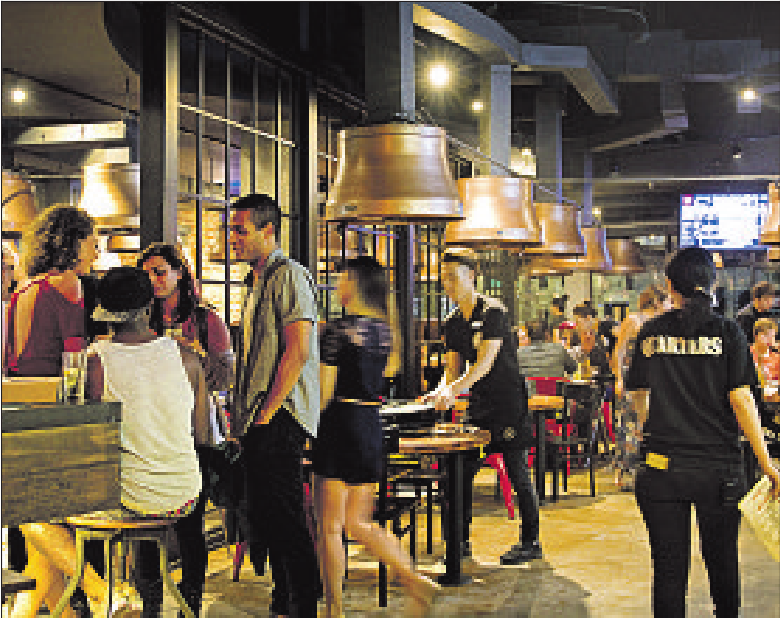
Urban living: Want street life, subways and a constantly changing neighborhood that isn’t downtown? Koreatown ticks all your boxes.
Neighborhood challenges The bad with the good: Traffic
is gnarly, the crime rate is on the high side and historic preservation
requires constant vigilance (just ask the Brown Derby and Ambassador
Hotel, both lost to the wrecking ball).
Parking: Good luck.
Expert insight Real estate agent Ken Kim said Koreatown is perfect for “people who love to go out.”
“Obviously, entertainment is No.1, and also its central location,” he said. “Transportation is really convenient.”
Several new condo developments have been built in the last few years, a plus for those who can afford them.
“Rather than buying a 5- or 10-year-old condo, they’d rather buy a new one,” he said.
Market snapshot Portions
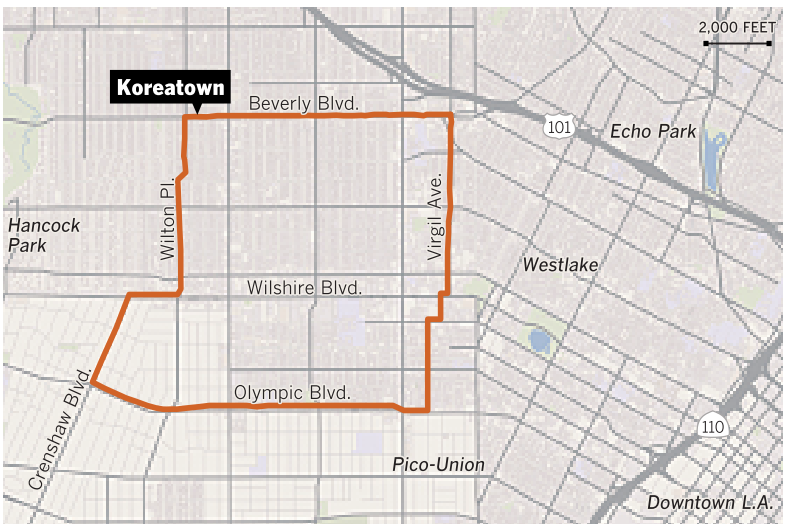
of the 90004, 90005, 90010 and 90020 overlap the area. In May, based on
17 sales, the median price for single-family homes in the 90004 ZIP
Code was $1.25 million. In the 90005 ZIP was also $1.25 million based on
four sales.
In the
90010 and 90020 ZIP Codes, where multi-family buildings are prevalent,
the median price for condos was $740,000 and $423,000, respectively.
Report card More
than a dozen charter and public schools lie within the boundaries of
Koreatown. Among them is Charles H. Kim Elementary, which scored 886 out
of a possible1,000 in the 2013 Academic Performance Index.
Camino Nuevo Academy #2 scored 864, and Cahuenga Elementary had a score of 858.
Wilshire
Park Elementary scored 841; Camino Nuevo Charter Academy scored 821;
and Frank del Olmo and Wilson Place elementary schools both had a score
of 819.
hotproperty@latimes.com