Market forces have begun to rouse it from its beach-town slumber.
Wayout on the far western reaches of Culver Boulevard— past the Ballona marshlands, wherethe asphalt ends and the fewmeager acres of beach sand dunes leftinLos Angelesbegin — is asmall coastalenclave with a historyofperseverance that befits its grandiose name: Playa del Rey, the beachofthe king.
Beforeacataclysmic flash flood in 1820,whenthe LosAngeles River changedits course to empty intothe ocean near San Pedro, Playa wasthe swampy mouth of the rio, whosewatersmade the surroundingcoastal plain prime grazing land for earlyEuropean settlers.
Luckily for the herds of thirsty cattle, and the massivecolonies of waterfowl that made their homes in the marshes, Ballona Creek continued to flow down the river’s ancientchannel, eventually forming alagoon that would become the center of the action in Playain the late1800s.
That’s whenPlaya del Rey joined communitiesupand down the coast of SantaMonicaBay in a heated competition to become L.A.’spredominant portinone of twoways: building along wharf, or dredging. Playachoose the latter and launched adevelopment effortthat gotasfar as building a rail line out to the lagoon, beforea shortageofmoney forced investors to abandontheir plan.
The little settlement’s next run at the big time came afew years later when boosters jumped on the beach-resortcraze that made neighboring Venice of Americaa worldwidedraw. They turned the lagoon intoaswimming plunge, built agrand hotel and constructed avariety of attractions designed to luretravelers out to what wasonce aswampy hinterland, includingamotor drome and an incline railway.
The good times lasted until the 1920s,whenthe luxurious Hotel del Rey burned to the ground and the resorttrade dried up.
Forits
next act, Playa went all in on residentialdevelopment, ridingaseries of
housing booms to greater and greater urbanization. The channelization
of Ballona Creekinthe 1930saccelerated this transition by eliminating
muchof the coastal marshland and reducing the sprawling Del Rey Lagoon
to afractionofits originalsize.
Today,Playa
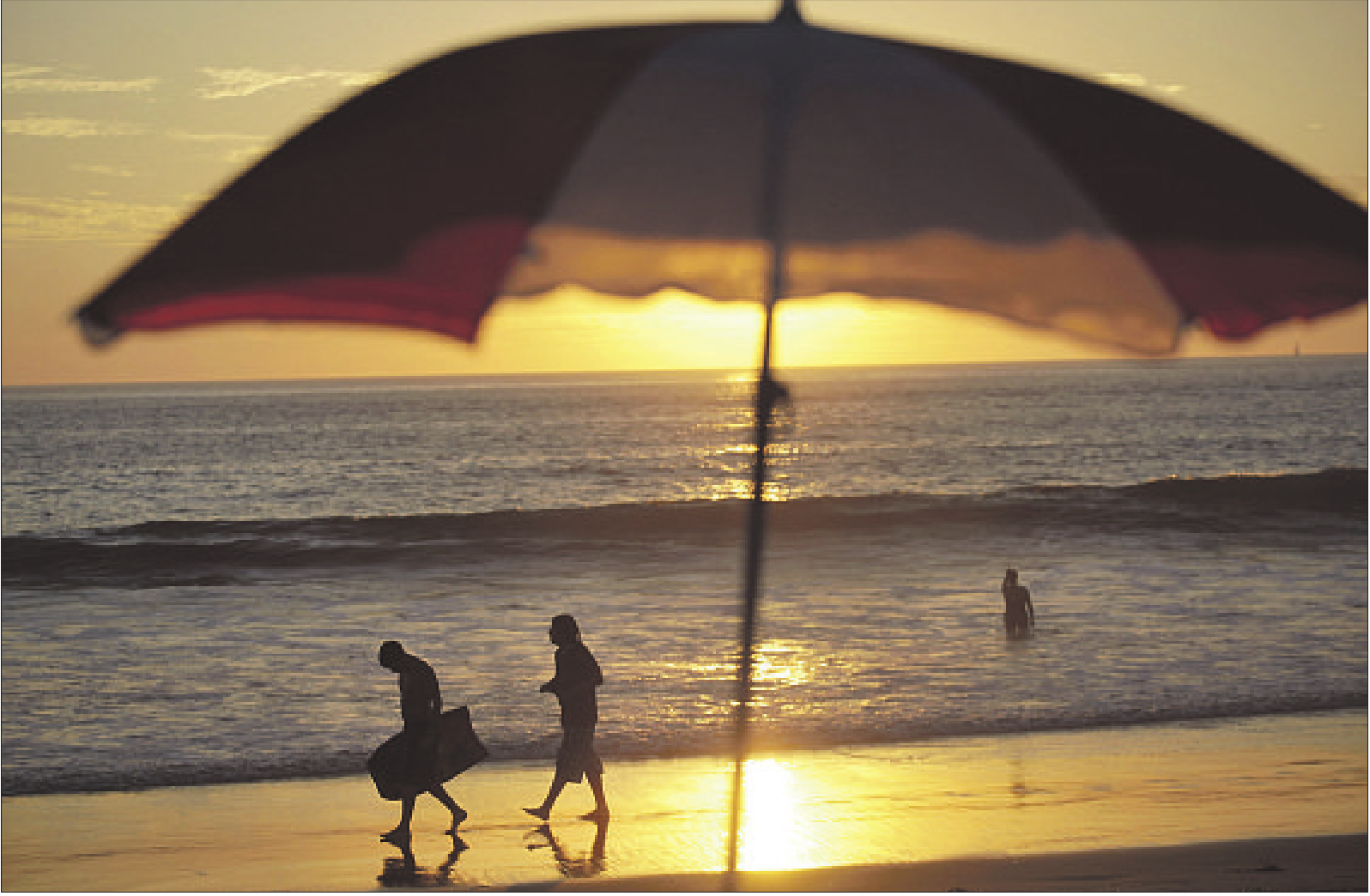
del Rey retains muchofthe feel of asmall beach town, surrounded by
towering bluffsonthe east, Ballona Creek on the north and LAX to the
south. Andevenifit’snot quite kingly,it’sstill agreat place to sit at
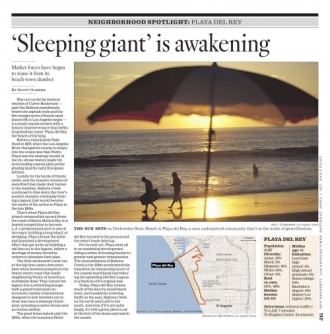
the foot of the dunes and watch the sunset.
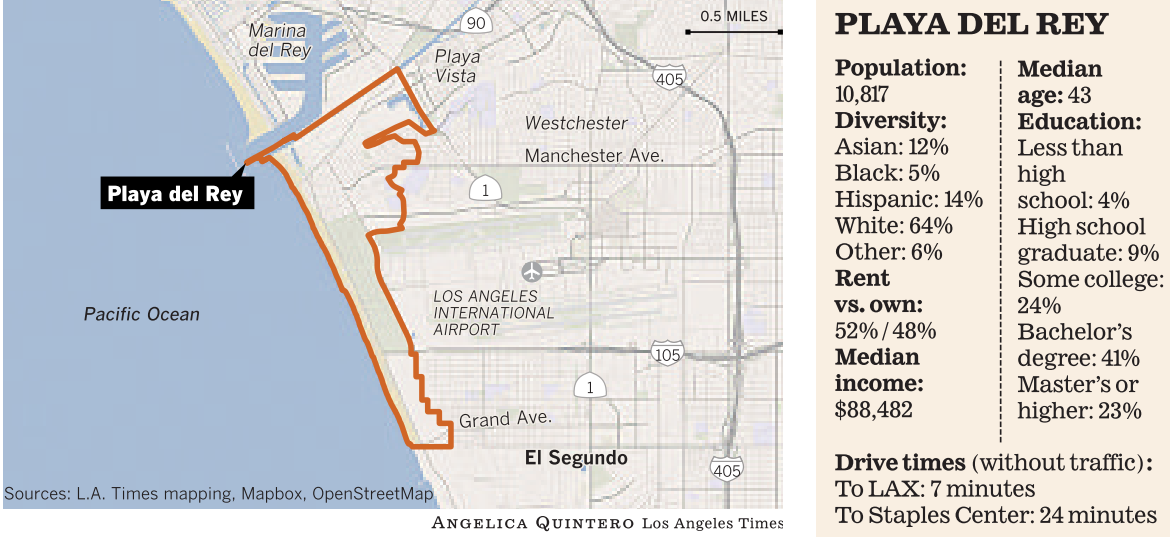
Neighborhood highlights Abeach town for the rest of us: Playa
has its own delightfully down-to-earth vibe, with plenty of old-school
dives and restaurants to hang out in, and zero pretentious airs.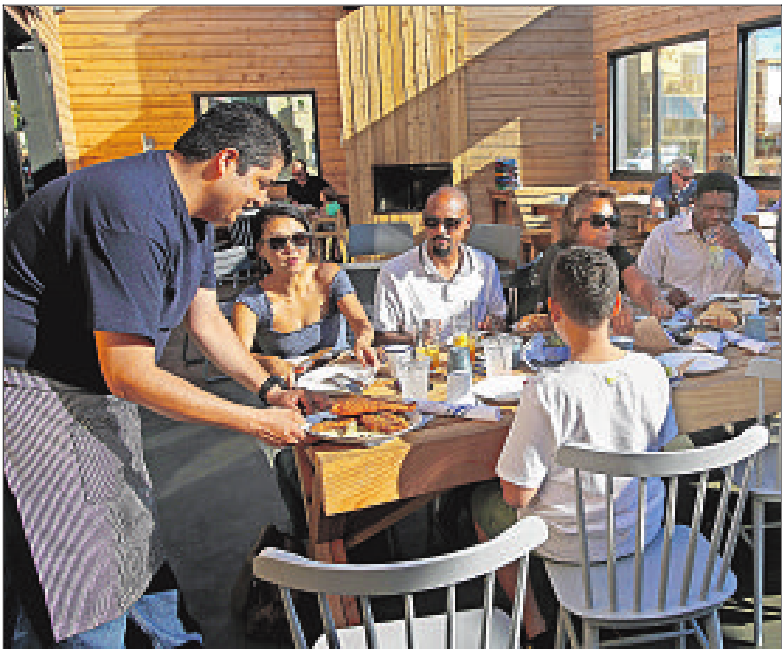
Afeast for the senses: In
Playa you’ll see planes taking off from LAX, an endless procession of
sailboats coming and going from Marina del Rey and, after sunset,
massive cargo ships lying at anchor.
Rest and relaxation: Plentiful
street parking, the Marvin Braude Bike Trail, the Del Rey Lagoon Park,
and, of course, the Pacific Ocean, make Playa a great place to spend a
warm summer day.
Neighborhood challenges
Aseaside racket: An
important thing to remember about Playa would be that LAX is right next
door, except you could never forget that LAX is next door because you
will hear it. All day. All night. Always.
Expert insight Tom
Corte, a partner at Corte Wright in Playa del Rey, said the
neighborhood is in the midst of a “huge gentrification” thanks in part
to the rise of the L.A. tech scene along the beach.
“It
was the most underpriced, orphaned community on the Westside,” the real
estate agent said. “Now all of a sudden, we are on the map. This has
been a sleeping giant, and it has been awakened by forces around the
neighborhood.”
For
now, Playa del Rey continues to be relatively affordable compared with
its beach-side neighbors, such as Marina del Rey and Venice. But Corte
expects that to change soon.
“Sellers perceive the urgency to buy here, so they’re waiting for that big push in price,” he said.
Market snapshot In
the 90293 ZIP Code, there were no single-family home sales in February,
according to CoreLogic. There were 16 condominium sales for a median
price of $641,000, a23.9% increase year over year.
Report card Within
the boundaries of Playa del Rey is Paseo del Rey Fundamental, a public
alternative school, which scored 864 out of 1,000 in the 2013 Academic
Performance Index.
Nearby schools include Richmond Street Elementary and Loyola Village Elementary, which had scores of 910 and 816, respectively.
El Segundo High scored 880, and Westchester Enriched Sciences Magnets: Health & Sports Medicine had a score of 704.
hotproperty@latimes.com