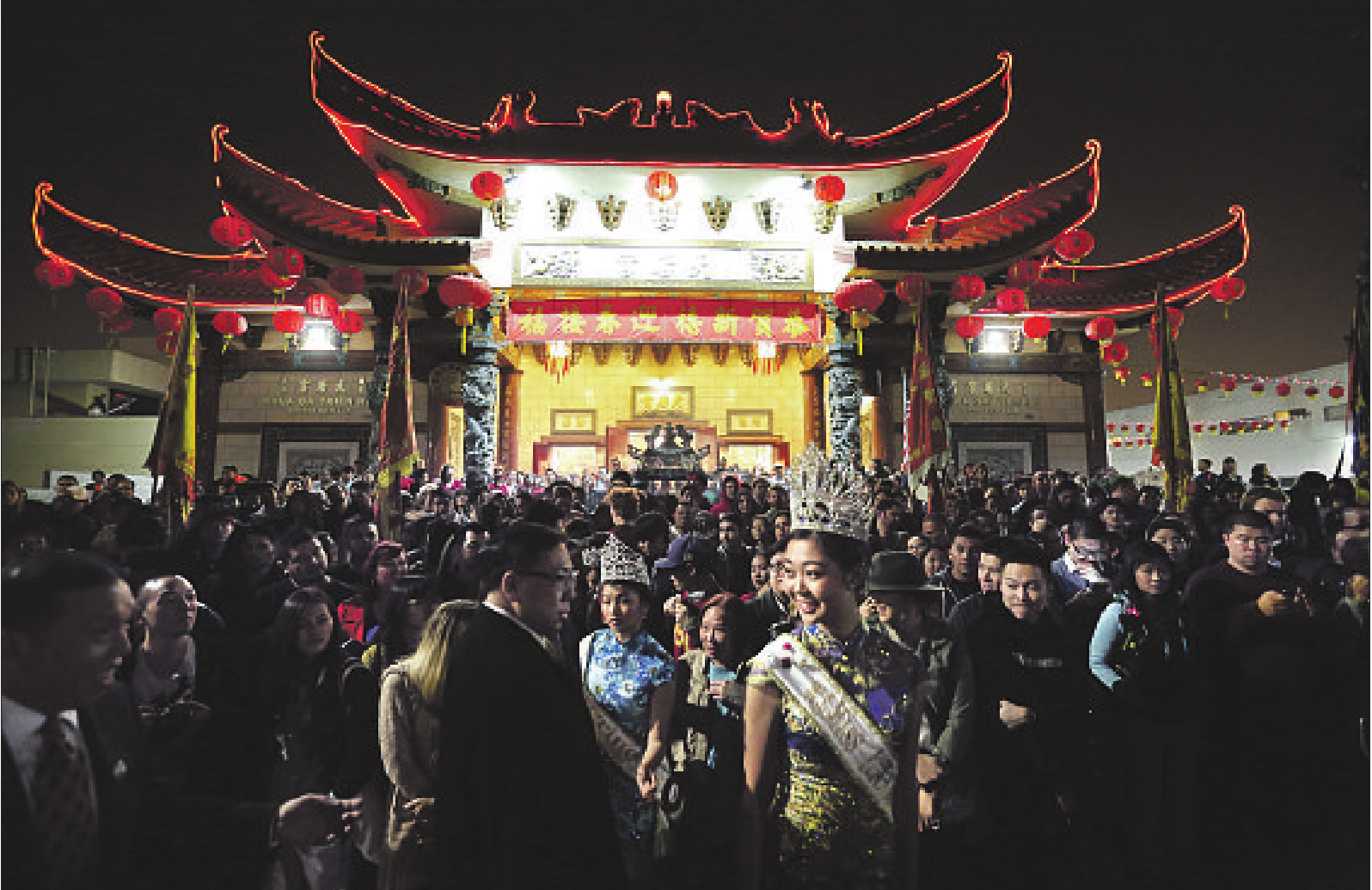
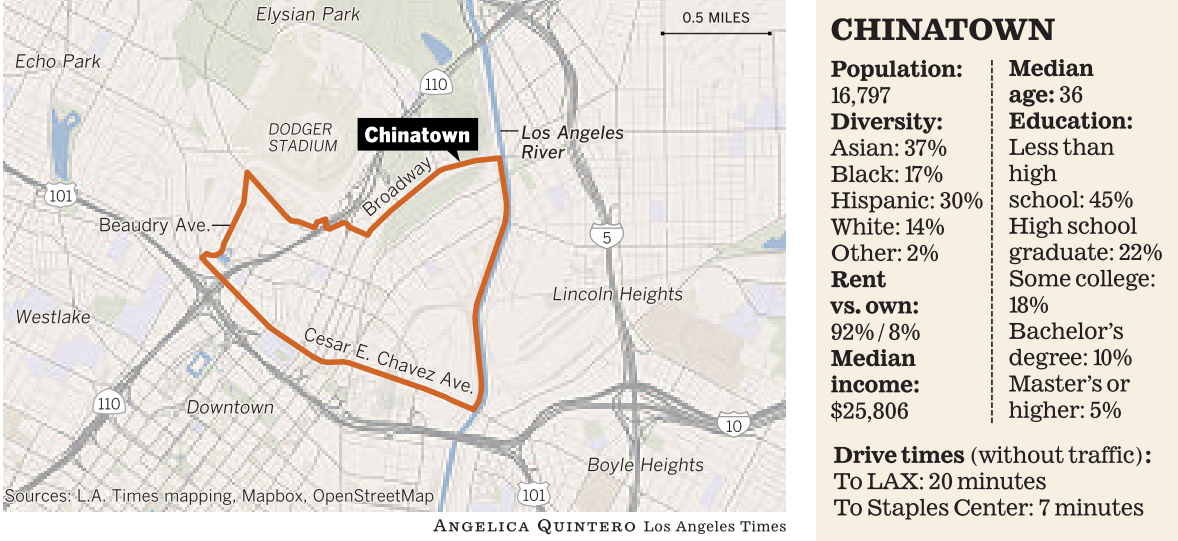
Community has a history of finding opportunity in a changing Los Angeles.
The long, storied historyofthe Chinese in Los Angeles began in 1850,whenthe census recorded twoChinese residents of the city.
They were partofawaveof Chinese immigrants drawn to California by the twin siren callsof the Gold Rush and plentiful construction jobs on the transcontinental railroad. They found ready work across California.
In L.A., these newAmericans began to settle in the area between the Los Angeles River and the Plaza.
With the end of construction of the railroad, anativist backlash resulted in arestriction against any Chineseworking as wage laborers, arestriction that they promptly turned intoanopportunitytoachieve success through entrepreneurial pursuits.
Soon Old Chinatownwas a thriving neighborhood, complete with aChinese opera and no fewer than three temples. In 1880,however,growing xenophobic sentiment reached its apotheosis with the Exclusion Act, whichbarred further Chinese immigration.
The act, in conjunction with prohibitionsagainst the ownership of property by anyone of Chinese ancestry, set in motion the sloweconomic decline of Old Chinatown, aprocess that accelerated in the 1930swiththe decision to raze the heartofthe neighborhood to makeway for Union Station.
L.A.’sChinese community, in an effortled by Peter SooHoo, began to search forasitetobuild a new, modern Chinatown. It found one just north of downtown, on Santa Fe Railroad land in what had historically been Little Italy.
To prevent the kind of dislocation that had forced them from their original neighborhood, they formed the Los Angeles ChinatownProject Assn., adevelopment group that would allowthemto control their owndestiny moving forward.
Working
to createarecognizably Chinese culturalexperience that wouldappeal to
locals and tourists alike, the association re-envisioned Chinatownasa
mixed-use residentialand retail complex.Buildingswereconstructed to the
most modern earthquake codes, the streets were wide and airy,
andtraditional Chinese architecture, as filtered through the popular
American imagination, wasforegrounded.
As
innovativeasNew Chinatownwas, its reignasthe center of Chinese American
life in Los Angeles wasshort. The end of the Exclusion Act duringWorld
WarII and the relaxationofracial covenants allowedChinese Angelenos to join the postwar exodus to the suburbs, with many making their new homes in San Gabriel Valley.
Today,
Chinatown is on an upswing. New apartment buildings and retail outlets
are going in; it has its own Metro rail station; and the Los Angeles
State Historic Park will finally open this month.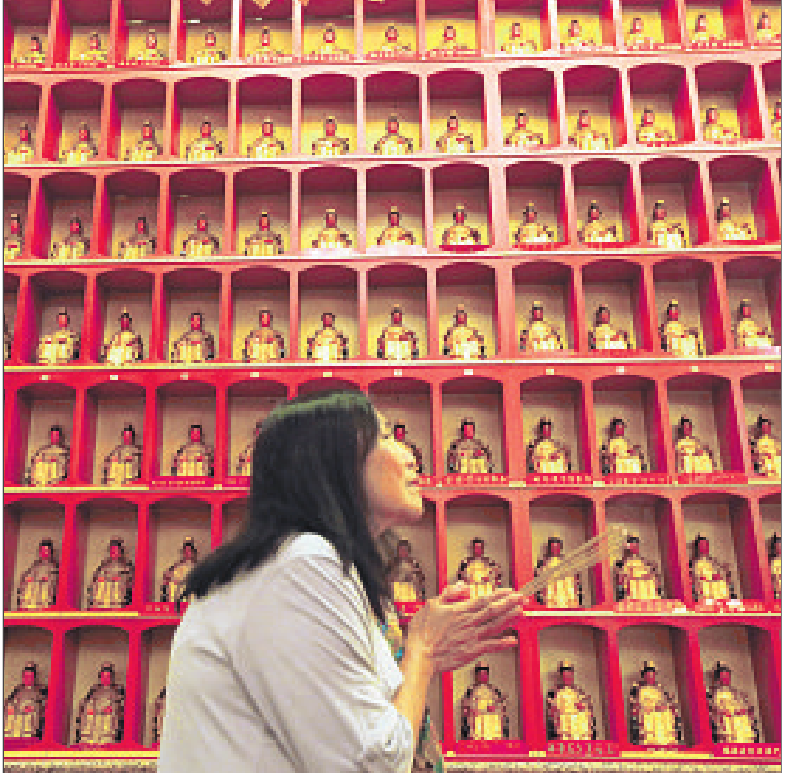
Neighborhood highlights Cuisine scene: In
the last few years, Chinatown has emerged as one of the city’s most
exciting hipster food havens, especially if you’re on a budget. Although
Pok Pok Phat Thai is no more, there are still Howlin’ Ray’s (if you can
stand the line), Chego, Lao Tao and more at the Far East Plaza alone.
Old meets new: The
original plaza is still standing and as popular as ever, and it’s now
being complemented by new residential development across the
neighborhood.
Alayered history: Three
historical timelines — the Italian and Chinese immigrant experiences,
and the early history of L.A. itself — come together in Chinatown.
Neighborhood challenges
Keeping it real: Chinatown
is touristy, sure, but it’s always been grittily true to itself.
Keeping new development from polishing away its interesting edges will
be a challenge. Expert insight With the rapid rise of downtown
L.A., neighboring communities are benefiting from the spillover, said
Johnny Choi, who does retail investments and leasing at CBRE.
“Chinatown
is really in the path of growth,” he said. “When it comes to commercial
and residential, people are very sensitive in terms of rent, and I
think everyone’s kind of moving outwards of downtown because downtown is
getting so expensive.”
Choi noted that for residents of Chinatown, “downtown L.A. is almost like an amenity to them — it’s, like, five minutes away.”
Market snapshot Portions of the 90012, 90031 and 90033 ZIP Codes overlap the Chinatown area.
In
February, based on three sales, the median sales price for condominiums
in the 90012 was $430,000, according to CoreLogic. In the 90031 ZIP,
the median sales price for condominiums, based on four sales, was
$376,000, and for single-family homes, the median price was $508,000
based on four sales.
In the 90033, there was one home sale of $750,000 for that month.
Report card Within
the boundaries of Chinatown are Castelar Street Elementary and Endeavor
College Preparatory Charter, which scored 874 and 870, respectively, in
the 2013 Academic Performance Index.
Nearby
schools include Albion Street Elementary, which had a score of 811, and
Betty Plasencia Elementary, which scored 786. Ramon C. Cortines School
of Visual and Performing Arts scored 737, and School for the Visual Arts
and Humanities had a score of 685.
hotproperty@latimes.com


