Historical districts remain intact during times of cultural evolution.
Hundreds of thousands of commuters grind their way up and down Hoover Street each year, inching their way, red light to red light, through one of L.A.’s densest neighborhoods.
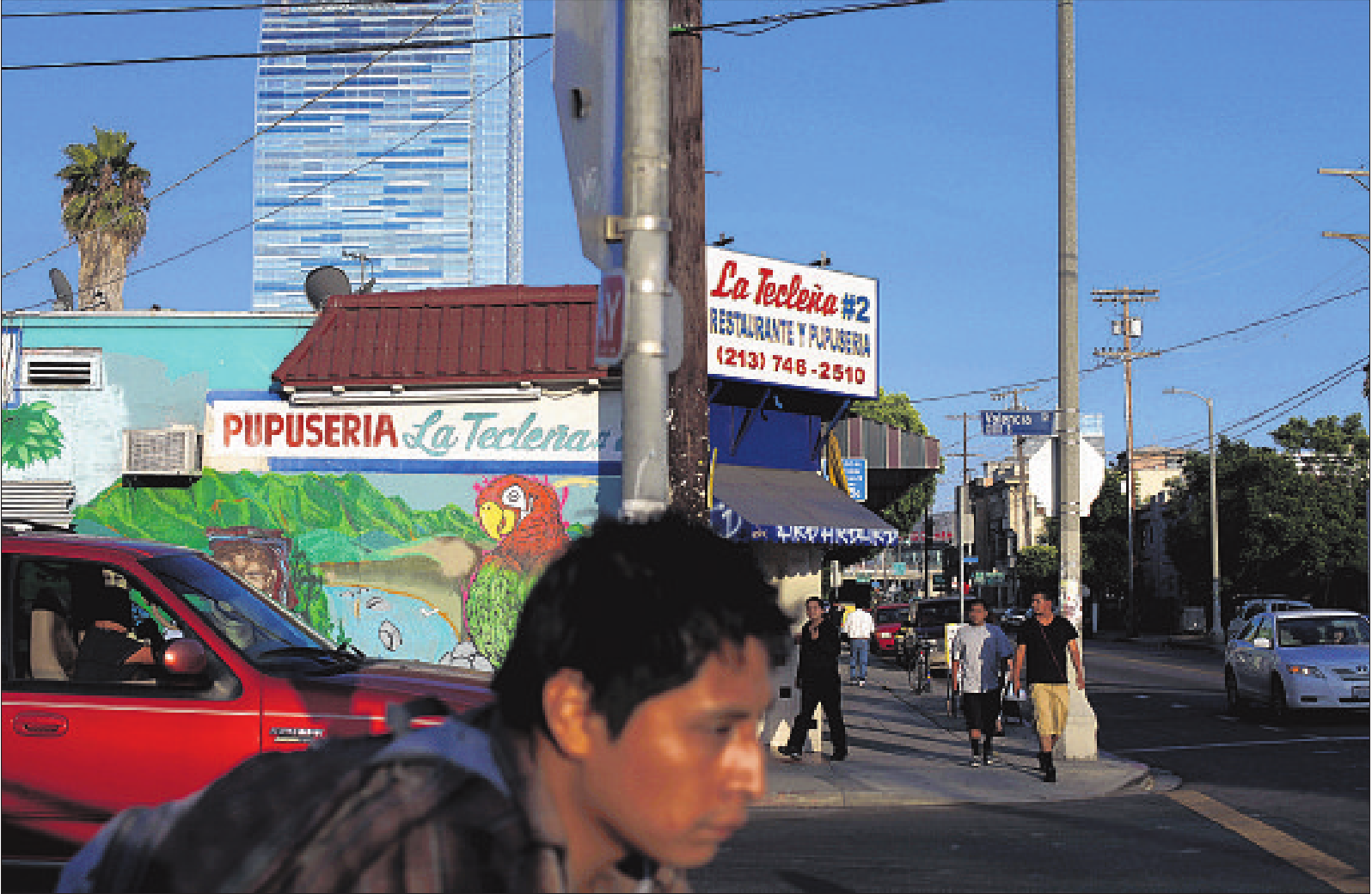
Most of them are unaware that just a few steps from Hoover’s junction with traffic-clogged Alvarado Street is a stunning time capsule of early Los Angeles, a neighborhood of grand homes and houses of worship offering a glimpse into a bygone era. It is a place built for life at the pace of a brisk walk to the corner store or a slow trolley ride to catch a vaudeville show on Broadway.
In Pico-Union, homes and apartment buildings constructed between the 1880s and the 1940s still stand, many of them wellpreserved, and some of them on the few remaining brick-paved streets anywhere in the city. From Queen Anne to Craftsman and everything in between, this neighborhood, which was once part of greater Westlake, traces the history of L.A.’s prewar residential styles.
The first homes were built here in the 1860s, when this part of the city was the far-flung western edge of the original pueblo.
The first homes in the area were adobes and farmhouses in the style of the American Midwest, but the streetcar brought downtown’s grandees and their large Victorian homes to this former hinterland.
As the central business district grew, even some of the homes there migrated westward to Pico- Union — they didn’t tear houses down then, they moved them.
As the city’s population skyrocketed from 11,000 in the 1880s to more than 1 million just 50 years later, this former suburb found itself at the heart of a booming metropolis. The well-to-do began to move to the Westside and beyond, and the neighborhood was eventually hemmed in by freeway construction. In the rush to the new, this oldest of neighborhoods was forgotten by many.
In
the 1970s and 1980s, the rambling old homes that had long since been
carved into apartments played a critical role in housing Central
American immigrants fleeing devastating civil wars. In the years since,
Pico-Union has remained an important gateway neighborhood for immigrants
from across Latin America.
L.A.’s
latest boom has brought renewed investment in Pico- Union, whose
proximity to downtown is once again a draw. There are plans for new
affordable housing units, hotels and office buildings stretching from
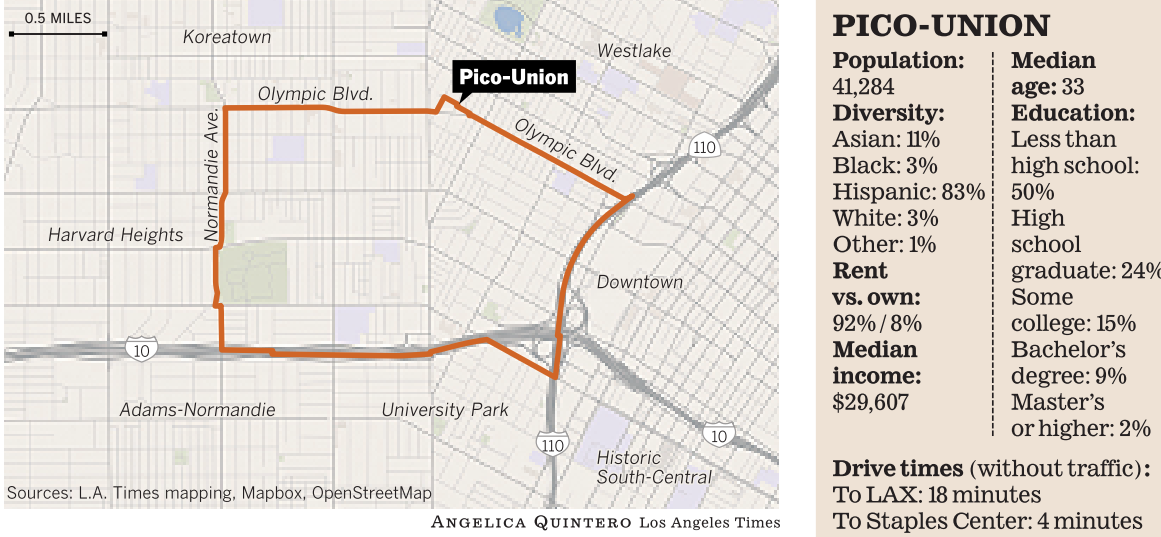
the Harbor Freeway to Normandie Avenue, and a new subway line is being discussed for Vermont Avenue.
Neighborhood highlights The past, preserved: Pico-Union’s
Alvarado Terrace and South Bonnie Brae historic districts are
incredibly intact, all the way down to L.A.’s shortest street, the 13-
foot-long Powell Place.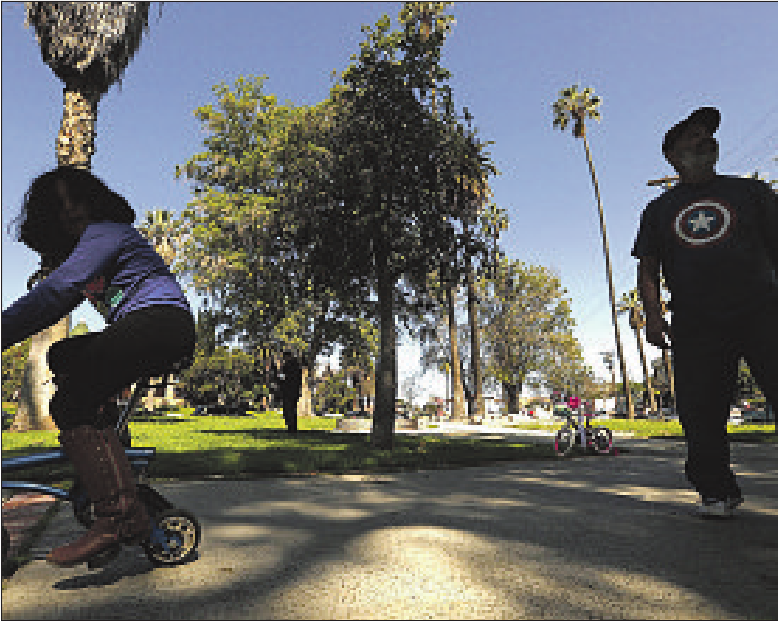
Prewar paradise: For
lovers of homes in the styles popular before the late 1940s —
especially Queen Anne aficionados — Pico-Union is architectural nirvana.
Arich heritage: With
a history of immigration from Korea, Greece, Mexico, Guatemala, El
Salvador, and more, Pico-Union has a rich mix of cultures.
Neighborhood challenges Thoughtful redevelopment: As investment ramps up, the historic character of the neighborhood’s environment could come under pressure from developers.
Expert insight Rising
prices in downtown L.A. are driving buyers to neighboring communities
such as Pico-Union, said Carol Li, a Fidelity Realtors agent who has a
listing on South Westlake Avenue.
“This
area has great potential,” she said. “Pico-Union is right next to
downtown, and a lot of improvements are happening to the area.”
Li
was quick to point out that “improvements” does not mean tearing down
structures in the historical area, but rather the restoration of them.
“This general area is a historical one,” she said. “If [developers] want
to do something to the home, they have to keep the outside look.”
As
for the market, things are picking up, but it really depends on the
pricing, condition and location of the building. “It’s a great area; a
lot of investors are taking note,” she said.
Market snapshot In
the 90006 Zip Code, based on six sales, the median sales price for
single-family homes in March was $720,000, according to CoreLogic. That
was a 25.7% increase in median price over the same month the previous
year.
Report card Within
the boundaries of Pico- Union is Tenth Street Elementary, which had a
score of 795 out of 1,000 in the 2013 Academic Performance Index.
Magnolia Avenue Elementary scored 770, and Leo Politi Elementary had a
score of 747. Berendo Middle scored 739, and West Adams Preparatory High
had a score of 646.
hotproperty@latimes.com