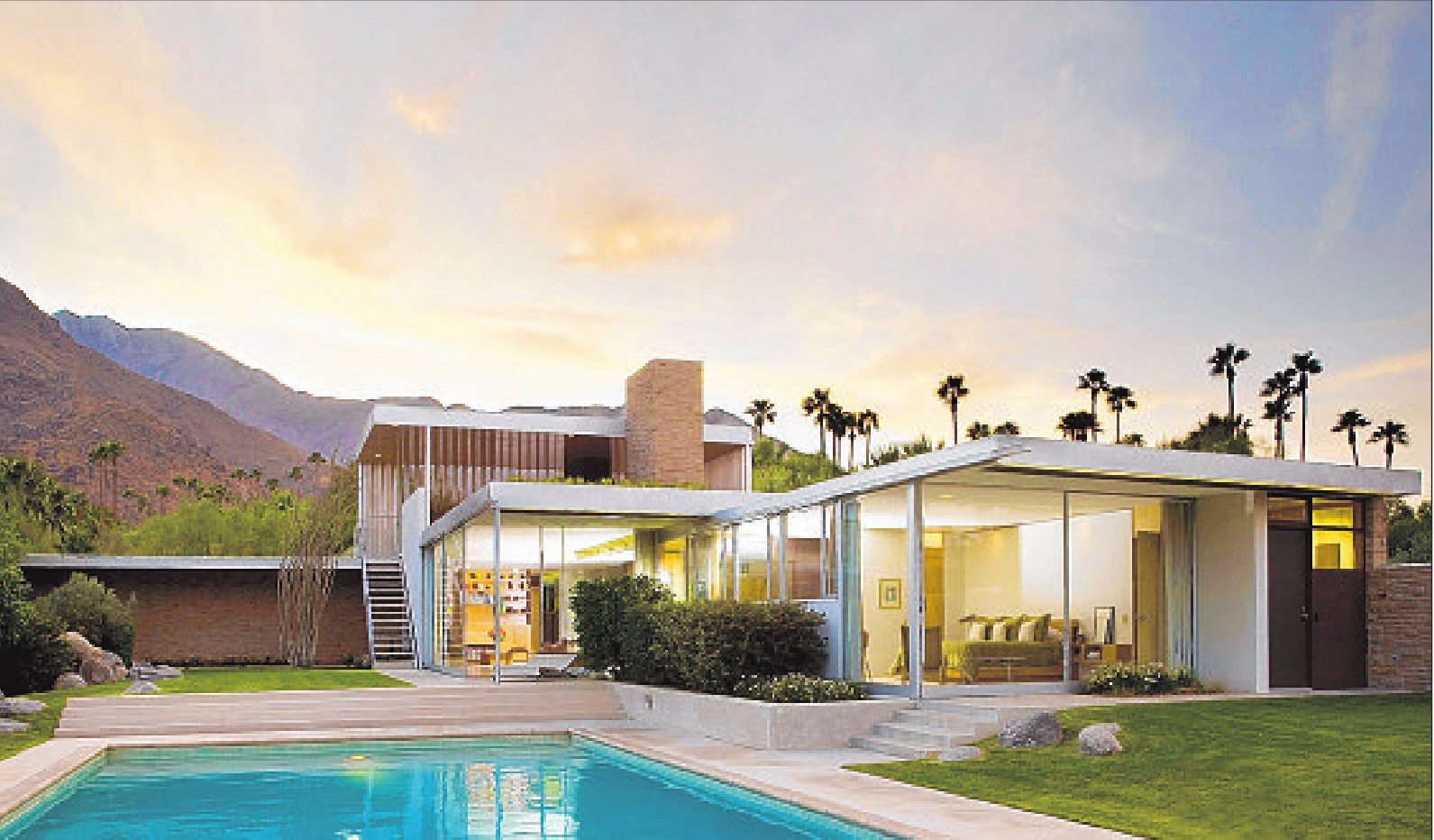
The airy style, free of ornamentation, connects with the outdoors.
As World War II ended, advances in manufacturing, easing of wartime austerity and pent-up creativity among builders and architects led to a design explosion with its ground zero in Southern California: midcentury modern.
Known for its open floor plans, wide expanses of glass and indooroutdoor living, the midcenturymodern movement created homes that still seem avant-garde today, 50 to 70 years after they were built.
“It’s about simplicity, clean lines, getting away from ornamentation and molding, exposing the raw structure,” said Doug Kramer, areal estate agent who specializes in modern homes. “Obviously, the style is very much centered on a connection with the outdoors — the experience of just being able to slide open a wall of glass and be open to the outside.”
Kramer was a fan long before he bought and sold these houses —he’s lived in a midcentury Cliff May-designed home in Long Beach for 22 years and was hooked when he first saw the modernist design of the airport in Tucson, his childhood hometown.
“The sense of space, the sense of openness, was one of the critical things I was looking for,” Kramer said.
World War II restrictions on building anything that didn’t advance the war effort created one of the biggest housing shortages in the country’s history, said Sian Winship, president of the Southern California chapter of the Society of Architectural Historians.
Once the war ended, servicemen in Southern California needed homes, and a coterie of progressive architects working in the area stepped in, eager to map out the future of home design.
“The concentration of new technologies, climate, postwar population boom and optimism made Southern California a fertile breeding ground for new
architecture in the post-World War II era,” said a report from the
National Park Service on the residential architecture of John Lautner.
One
of the main engines of the movement was the Case Study House program,
launched in January 1945 by Art & Architecture magazine editor John
Entenza.
The program,
from 1945 to 1960, tapped leading architects of the day — mostly living
in Los Angeles, where the magazine was based. Entenza said he believed
advancements in home building would “expand considerably the definition
of what we mean when we now say the word ‘house.’ ” The project led to
some of the most iconic examples of modernist architecture, captured in
the pages of the magazine by photographer Julius Shulman and
disseminated worldwide.
The
best known is probably his shot of Case Study House No. 22, the Stahl
House, a glass-and-steel box cantilevered over the Hollywood Hills. The
viewer peers into one glass wall, through the house, and out another —
sharing the panoramic view of L.A. city lights with the
cocktail-dress-clad ladies inside.
Because
of advances in manufacturing and construction and the use of industrial
materials in home building, the midcenturymodern houses didn’t need
structural load-bearing walls with windows cut into them. Instead they
featured long beams supported by wood or steel posts, which enable the
massive walls of glass the style is known for.
The
style, Winship said, “starts in earnest after the war, but you can see
the seeds before,” in the work of Frank Lloyd Wright, Rich ard Neutra
and others.
Real
estate developer Joseph Eichler was still the treasurer of his family’s
produce business when he briefly rented a Wrightdesigned home in
Northern California during the war. The home’s openness and light
inspired Eichler, and he launched a new career, building more than
11,000 modernist houses in Southern and Northern California.
But
maybe the greatest concentration of midcentury-modern homes can be
found in Palm Springs, which had the same need for postwar housing among
service people based there.
The
modernist boom in the desert was also fueled by a market for vacation
homes (thanks to peacetime affluence), and getaways for Hollywood stars
and other well-to-do Angelenos.
Father-son
builders George and Robert Alexander saw the void and filled it with
about 2,500 modernist homes in the Palm Springs area. “It’s the holy
land for midcentury-modern enthusiasts,” Kramer said.
Popularity
of the style waned as the 1960s ended. But in 1989, a LACMA exhibition,
“Blueprints for Modern Living: History and Legacy of the Case Study
Houses,” rekindled interest in midcenturymodern architecture. Their
appearances in movies, TV and commercials — as eye-catching, offbeat
settings — also generated intrigue.
“It’s
definitely not a fad,” Kramer said. “It’s established, just like
Craftsman, just like Spanish —it stands with all of that in the
architectural history of Southern California.”
hotproperty@latimes.com
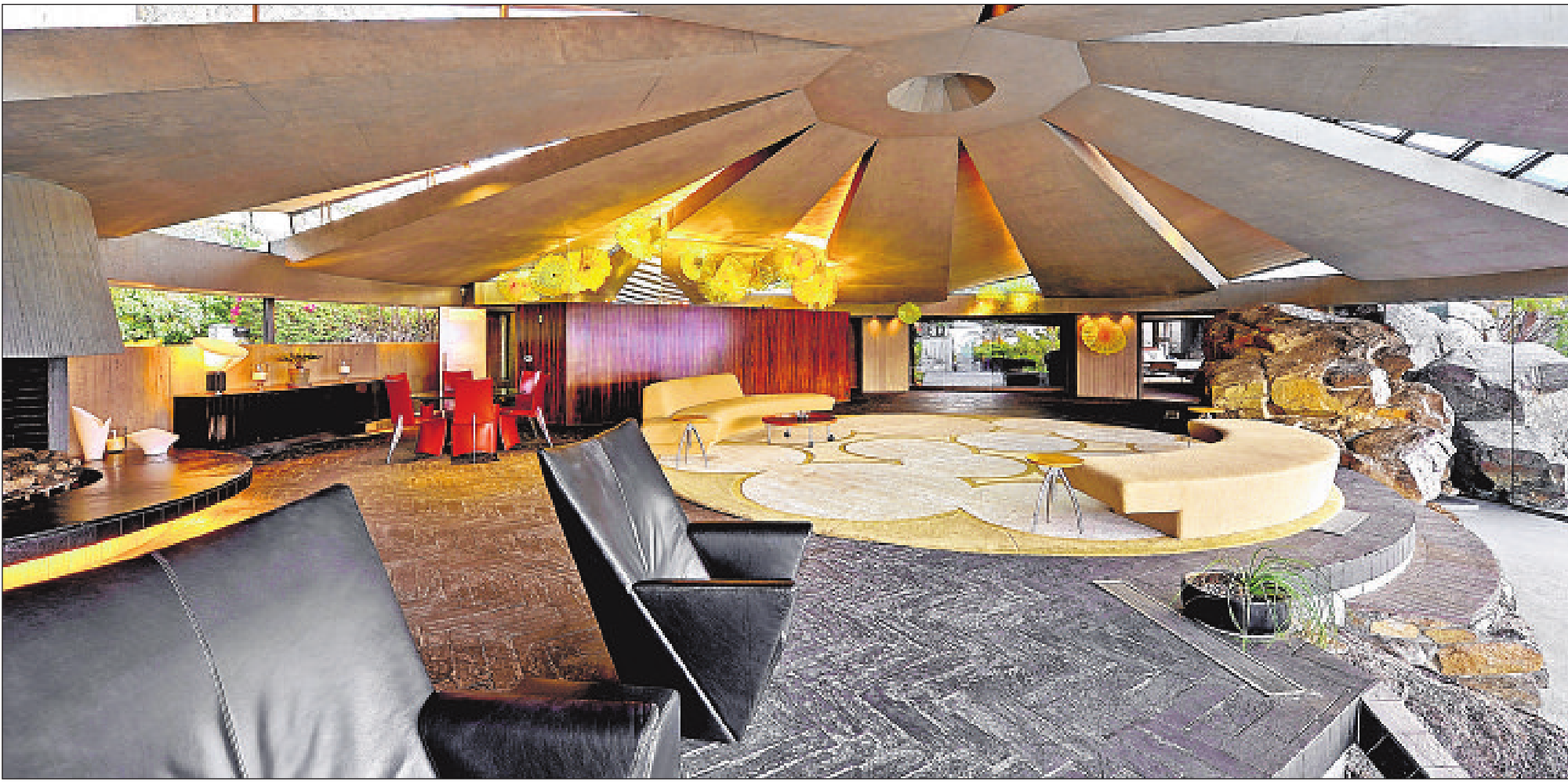
MIDCENTURY MODERN
Features: Clean
lines, little ornamentation, open floor plans, wide openings between
rooms and to the outdoors, post-andbeam construction, lots of glass,
turning the focus from the street to the backyard.
Where to find them: Hollywood
Hills, Palm Springs, Long Beach, Orange, Beverly Hills, Pacific
Palisades, West Hollywood, North Hollywood, Thousand Oaks, Granada
Hills, Villa Park
Prominent architects: J.R.
Davidson, Richard Neutra, Sumner Spaulding, Eero Saarinen, Charles
Eames, William Wilson Wurster, Ralph Rapson, Pierre Koenig, Raphael
Soriano, A. Quincy Jones, Edward Killingsworth, William Krisel, John
Lautner, R.M. Schindler, Rodney Walker, Edward H. Fickett, Richard
Dorman, Cliff May


