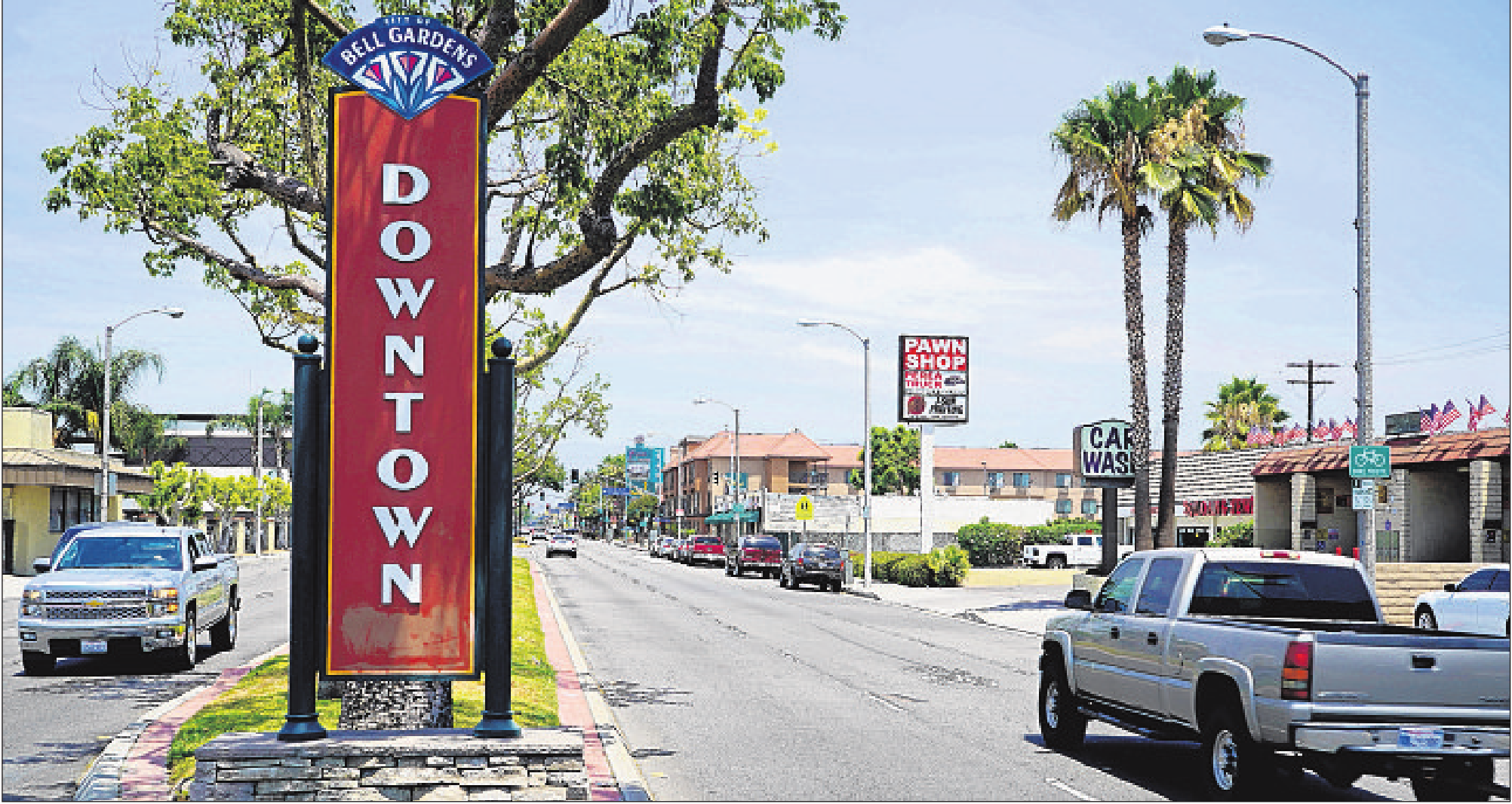
City is home to lower-cost houses, as well as to sites highlighting links to European settlement.
Like the rest of the Gateway Cities, Bell Gardens was once part of the vast landholdings of Don Antonio Lugo, who in 1810 received abig swath of ranch land from the king of Spain in recognition of his military service.
The Californio built a sprawling network of adobe buildings to house his extended family, including a main residence that also functioned as the headquarters of his ranching empire.
That house was eventually passed along to Henry Gage, a lawyer from Michigan who had come to California, when he married Lugo’s great-granddaughter in 1880. Gage would go on to become Los Angeles city attorney and, at the turn of the century, serve a term as California governor.
Gage’s bungled handling of a bubonic plague outbreak in the state led his fellow Republicans to deny him the nomination for a second term as governor, and he returned to the adobe mansion, once again hanging his shingle as a lawyer.
Upon his death in 1924, the old adobe, kitted out in wood siding and sporting luxury interior features such as bronze fireplaces, remained in the possession of the Lugo and Gage clan.
It sat on the few remaining acres of Lugo’s once-massive rancho, surrounded by orchards and vegetable fields, many of which were run by Japanese families who made their homes in the area during the first half of the 20th century.
Although a portion of the community was incorporated as the city of Bell in 1927, the remaining farming settlement — which would one day be known as Bell Gardens — remained sparsely populated and semirural.
The building boom that followed World War II led to the suburbanization of Bell
Gardens, which incorporated as a city in 1961. New homes filled the
fields. Surrounding the adobe mansion, which holds the title of the
oldest residence in Los Angeles County, a mobile home park sprang up.
In
1983, the residents of that mobile home park formed a co-op to buy the
mansion, and they secured landmark status for the structure. Today it
still stands near the banks of the Rio Hondo, a fading monument to the
Californio era.
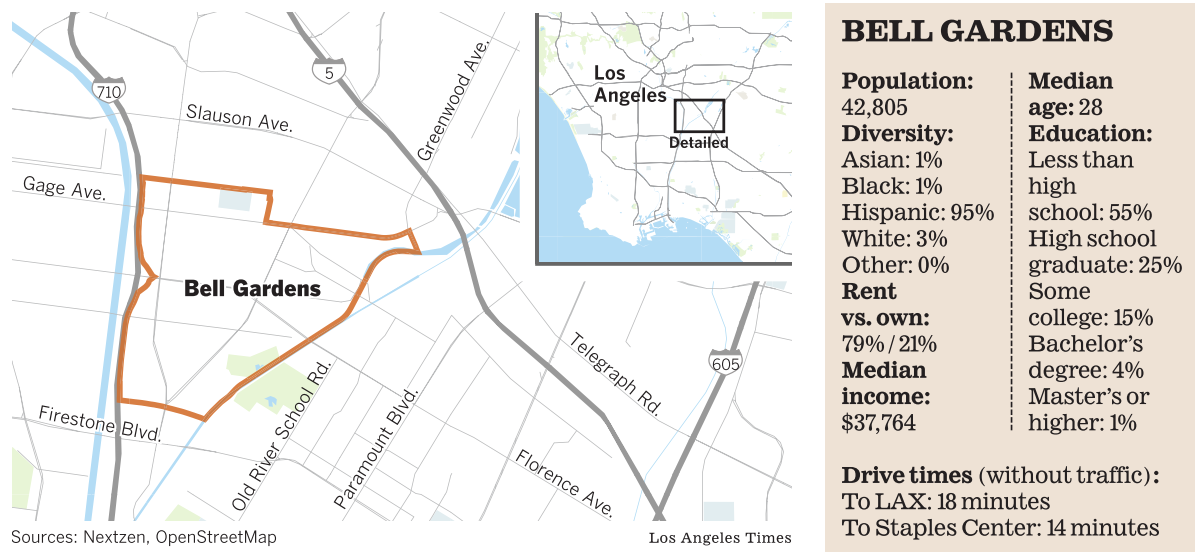
Neighborhood highlights Rich in California history: With three major landmarked homes within the 2.4 square miles of Greater Bell Gardens, the city has an outsized physical connection to the early European settlement of the region.
Parks and rec: With
the Rio Hondo and L.A. River bike paths that bracket the city, a
municipal golf course, and bucolic John Anson Ford Park, Bell Gardens
offers plenty of recreational opportunities. Can’t beat the price: With
condos and town homes starting just above $300,000 and single-family
homes sitting below the $600,000 mark, Bell Gardens is one of the more
affordable communities in the L.A. Basin.
Neighborhood challenge Air quality concerns: Bell
Gardens is flanked by the 5 and 710 freeways. A widening project has
been proposed for the 710 Freeway; if approved, that could dramatically
increase traffic — and pollution — in the area.
Expert insight
Hugo
Contreras, a real estate agent active in Bell Gardens since the
early1990s, said the area’s steady supply of houses under $500,000 draws
many first-time buyers.
“Standard
construction is the norm here,” Contreras said, adding that the
majority of new projects are either tract homes or “planned unit
developments.” PUDs are communities or subdivisions, usually composed of
either single-family homes or condos, that share amenities through
homeowners association fees.
With
the lack of available land, developers end up building highdensity
condos and town homes to maximize the space. The practice favors
affordability over architectural variety.
Looking
ahead, Contreras said, the community could benefit from more retail
spaces. Land is still relatively cheap, and as long as it stays that
way, Bell Gardens offers plenty of potential for investors and
developers.
Market snapshot In
the 90201 ZIP Code, based on four sales, the median sales price for
single-family homes in June was $470,000, up 20.5% year over year,
according to CoreLogic.
Report card Bell
Gardens has seven public schools within its boundaries, and all seven
scored around the 700s on the 2013 Academic Performance Index. Bell
Gardens Intermediate scored the highest, at 741, followed by Suva
Intermediate at 738 and Suva Elementary at 726. The area’s high school,
Bell Gardens High, scored 704.
Times staff writer Jack Flemming contributed to this report. hotproperty@latimes.com


