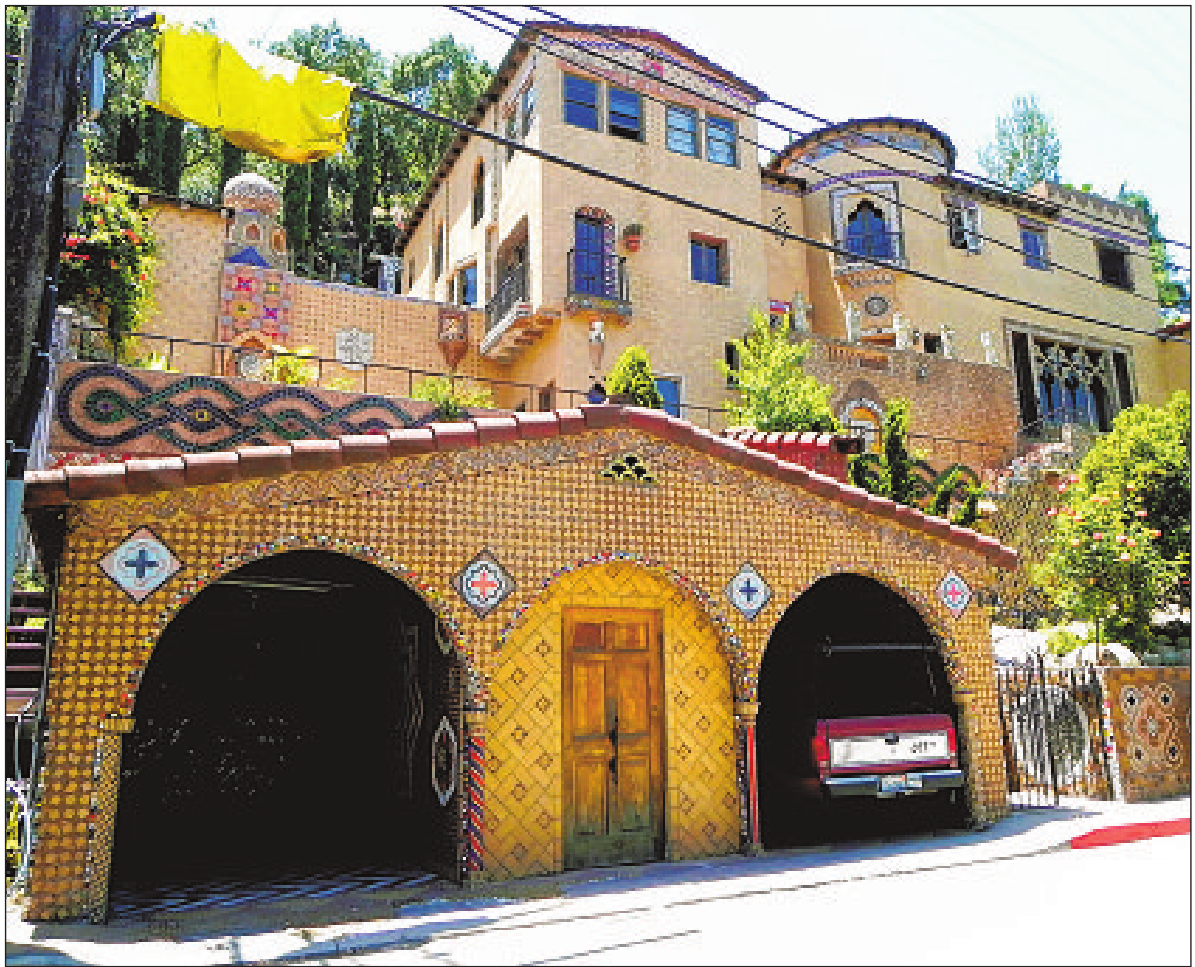
An ambitious project takes inventory of culturally and architecturally important historic assets citywide.
Los Angeles has a new living document of historic resources — the largest and most ambitious such undertaking in the U.S., and one that will shape city planning for generations to come.
Called SurveyLA, the citywide effortidentified and evaluated historic properties, structures, districts and places that date from 1865 to 1980. The exhaustive blockby-block inventory of 880,000 parcels scattered over 470 square miles began in 2010 and was completed last year.
“The last historic survey that was even close to this scope and magnitude was in Chicago in the 1980s,” said principal city planner Ken Bernstein.
“It was a huge data-management challenge,” Bernstein said.
Before this effort, only about 15% of L.A.’s historic resources had been charted.
The heart of SurveyLA — beyond mere recording of historical facts — tells a story of people and places. Included is a citywide historic context statement with 200 themes and sub-themes: from Latino and LGBTQ histories, to such topics as garden apartments, street lights, fire stations, bowling centers, skating rinks and even Quonset huts.

Arecently completed 112-page “Women’s Rights in Los Angeles” context statement details a golden era of women’s clubs, as well as a 1969 rally at the Los
Angeles Times protesting segregated classified ads (“Jobs of Interest to
Women” and “Jobs of Interest to Men”).
With
the comprehensive mapping, new development can be directed away from
historic districts, and buildings can be identified for adaptive reuse.
The knowledge will also assist during disaster response, helping to
prevent demolition of historic structures without proper review.
Findings will also benefit cultural tourism and location scouting, and
will help mark neighborhoods and properties for potential historic
designation.
Moreover,
some 30,000 potential historic assets identified by SurveyLA are being
synthesized within HistoricPlacesLA, an interactive online site that
links historic places, people, cultural themes, districts, streetscapes
and more, inside a vast neural network.
For
example, search the site for Bel-Air’s 1931 Nicolosi estate, and a
bubble map reveals the architect (Paul R. Williams), a notable owner
(swimmer Johnny Weissmuller of “Tarzan” film fame), and an occupant
(rocker Mick Jagger), among other details.
The HistoricPlacesLA website, launched in 2015, will be updated in early 2019 with SurveyLA’s complete data set.
The
data will also be crucial to the city’s planning department as it
updates 35 community plans, the blueprints for future growth among
L.A.’s disparate neighborhoods. Some of the plans haven’t been revised
since the 1990s, and the department set 2024 as the date to complete
their modernization.
SurveyLA
was funded by a $2.5-million grant from the Getty Foundation, matched
by the city, while the Getty Conservation Institute partnered with the
city to create HistoricPlacesLA. Getty largely sparked the impetus for
the citywide field survey; after sponsoring so much conservation work
worldwide, it turned to focus on its own backyard.
Overall,
SurveyLA and HistoricPlacesLA fortify preservation efforts in a city
that, contrary to popular belief, has been “ahead of other
municipalities,” Getty Conservation Institute director Tim Whalen said.
“Los
Angeles was one of the first major cities in the country to have a
comprehensive preservation ordinance — it dates to 1962,” Whalen said.
In
addition to the grant, Getty’s contribution includes Arches, an
open-source, web-based system to “inventory and manage immovable
cultural heritage,” and which powers HistoricPlacesLA. Created by the
Getty Institute and the World Monuments Fund in New York, Arches’
identification abilities are “incredibly powerful,” Whalen said, and are
derived from an archeological inventory system built for the Jordanian
Department of Antiquities.
As
Arches becomes more available to cities worldwide, the computerized
data sets “will start talking to each other,” said Arches project
manager Alison Dalgity. For example, “a hobbyist on the other side of
the world” could enter data about an event or person associated with an
L.A building or district, which Arches would then spot, she said.
“You don’t know what you’re going to find — that’s the exciting part,” she said.
hotproperty@latimes.com


