HOT PROPERTY
This content is produced by the B2B Publishing team of the LA Times. It does not involve the reporting staff of the LA Times.
KEEP YOUR SUMMER GARDEN HEALTHY
Give
your home produce department some
attention. Keep harvesting thru the fall
Formanyhome vegetable gardeners,it’s always athrill when summer arrives, heralding the start of harvesting manyoftheir favorite vegetables. As the days getwarmer,your garden bounty grows. Here areafew things youcan do during the summer to makeit morelikelyyourcrops will continue growing into the fall.
1. Don’tguess when your plants arethirsty
Plants areliving thingsthat need water,but if theyget overhydrated or underhydrated, it could leadtodisease and root rot. “If the top inch is dry, your plants areprobablythirsty,” says SidneyPhelps,director of e-commerce for Bonnie Plants,anational vegetable and herb supplier.“If yousee aplant with droopy leaves, it’sanother sign that it’stime to water.” Phelps suggests, “Water earlyinthe morning to prevent evaporation, andaim the hoseor watering can at the baseofthe plants to get moisturetothe roots.”
2. Mulching is amust
When youspreadmulch—a protective layeroforganic leftovers likeshredded leaves, grass clippings, and pine needles or inorganic matter likestone—it keeps weeds at bayand helps the soil retainits moisture, making your garden grow strong.
3. Pull weeds earlyon
Thesefast-growing plants love mostkinds of soil, so it’simportant to spend afew minutes everyday checking for anynew growth. Grab the weed at its base and gentlytug until you’ve pulled out the root.Justpulling off what’s above ground isn’tenough to kill the root.
4. Surveyplants for damage
If younoticedamaged leavesinyourgarden, youmostlikelydon’tneed to getrid of the entireplant. “It’sasign that youcould be dealing with pests or disease that youneed to takecare
of right away,” says Phelps.Ifyou seedamaged leaves, immediatelyclip off the affected part of the plant and put it in the garbage, not the compost. Then clean your clippers and hands thoroughlytokeep the problem from spreading.
5. Feed plants with fertilizer
To keep plants producing abountiful harvest,about amonth after planting your vegetables and herbs,start fertilizing them regularly. “Asplants grow,theyuse up the nutrients available in the soil, and fertilizing helps replace thosenutrients throughout the growing season,”according to Phelps. It will alsoallowthem to develop arobust root system to better absorb water.Well-fed plants can alsomoreeasilyfight off pests and diseases.
6. Harvest the vegetables often
Youplanted them to eatthem so pick when they’re ready. When youdon’tharvest vegetables often enough, some plants likecucumbers stop producing; this is true for herbs too.
–CTW Features
Contact us with comments or questions at hotproperty@latimes.com.
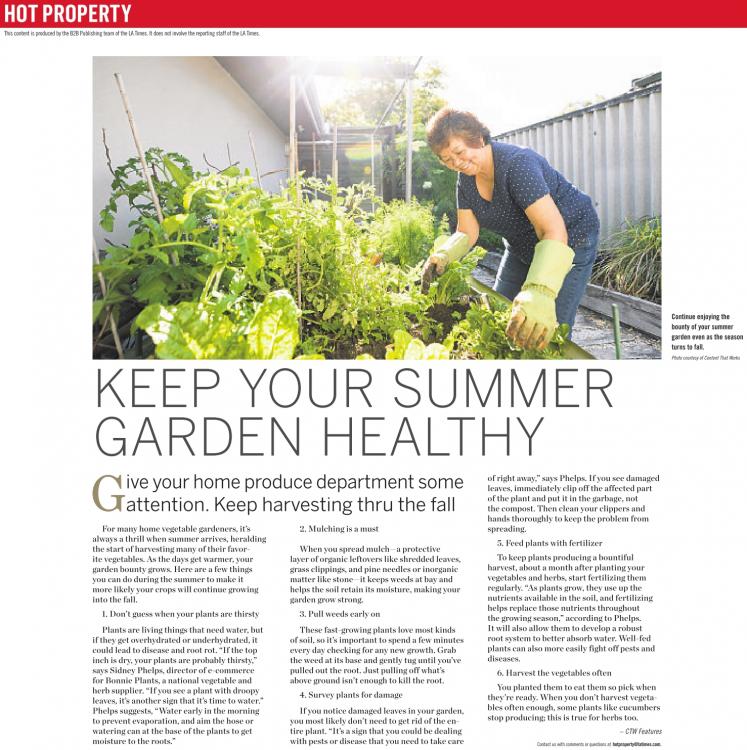
Continue enjoying the bounty of your summer garden even as the season turns to fall. Photo courtesy of Content That Works


