HOT PROPERTY
This advertising supplement is produced by the L.A. Times B2B Publishing team. This did not involve the editorial staff of the L.A. Times.
HOW TO CARE FOR YOUR
YARD IN A DROUGHT
We
all know that grass, flowers, shrubs, and other plants need crucial H2O to survive and thrive. Problem is, Mother Nature may not provide enough liquid sustenance for the needs of your home’s foliage.
Camille Cimino, a landscape designer with Los Angeles-headquartered The Nature of Things. “Irrigation timers are simple to learn but essential to cutting waste, and they’re a great help if you go away on vacation.”
Cimino sets her timer to water in intervals, such as on for two minutes then off for an hour before repeating this cycle until she has 10 minutes of watering.
This is especially true currently in the Western and Southwestern United States, which has been suffering from drought conditions for years. To help your yard and its flora flourish, be prepared to set up a careful watering schedule or, if necessary, replace grass, flowers, or plants with drought-resistant species.
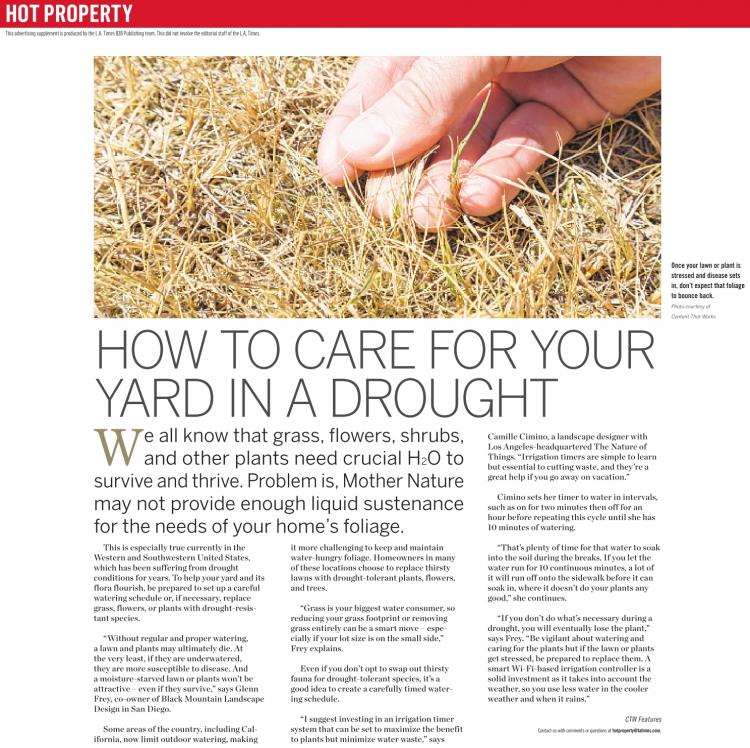
“Without regular and proper watering, a lawn and plants may ultimately die. At the very least, if they are underwatered, they are more susceptible to disease. And a moisture-starved lawn or plants won’t be attractive – even if they survive,” says Glenn Frey, co-owner of Black Mountain Landscape Design in San Diego.
Some areas of the country, including California, now limit outdoor watering, making
it more challenging to keep and maintain water-hungry foliage. Homeowners in many of these locations choose to replace thirsty lawns with drought-tolerant plants, flowers, and trees.
“Grass is your biggest water consumer, so reducing your grass footprint or removing grass entirely can be a smart move – especially if your lot size is on the small side,” Frey explains.
Even if you don’t opt to swap out thirsty fauna for drought-tolerant species, it’s a good idea to create a carefully timed watering schedule.
“I suggest investing in an irrigation timer system that can be set to maximize the benefit to plants but minimize water waste,” says
“That’s plenty of time for that water to soak into the soil during the breaks. If you let the water run for 10 continuous minutes, a lot of it will run off onto the sidewalk before it can soak in, where it doesn’t do your plants any good,” she continues.
“If you don’t do what’s necessary during a drought, you will eventually lose the plant,” says Frey. “Be vigilant about watering and caring for the plants but if the lawn or plants get stressed, be prepared to replace them. A smart Wi-Fi-based irrigation controller is a solid investment as it takes into account the weather, so you use less water in the cooler weather and when it rains.”
CTW Features
Contact us with comments or questions at hotproperty@latimes.com.
Once your lawn or plant is stressed and disease sets in, don’t expect that foliage to bounce back.
Photo courtesy of
Content That Works


