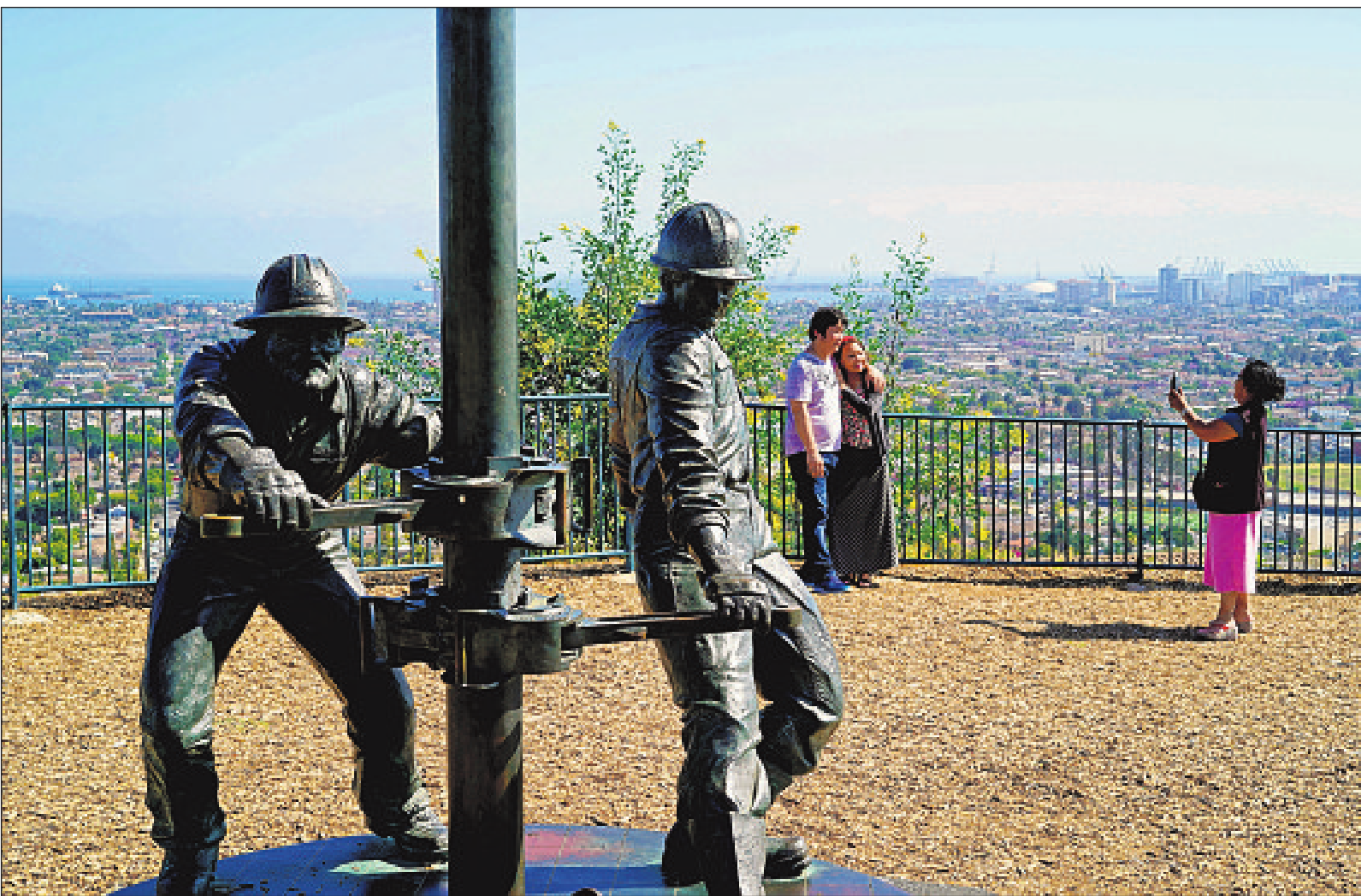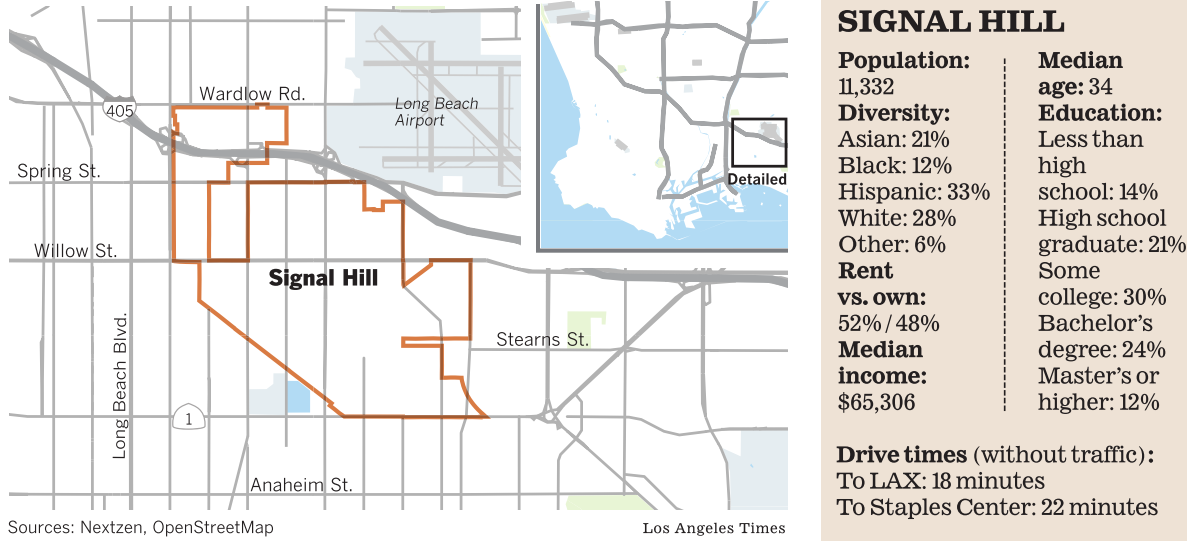
Over the decades, the focus has shifted from that of its oil boomtown days.
The city of Signal Hill takes its name from the promontory at its heart, a rise that juts 365 feet above the plains of the southern Los Angeles Basin. The commanding mountains-to-ocean views it offers led the Tongva to establish a camp at its peak from which to signal their kinsmen across the region and all the way out to Catalina Island.
The Tongva name for the hill has been lost; it was the Spanish who dubbed it Loma Señal, or Signal Knoll. During the years when Alta California was part of the Spanish empire, the hill overlooked the grazing herds of horses and cattle that roamed the Rancho San Gabriel Arcangel.
By that time, the Tongva canoes that had plied the waters between the mouth of the San Gabriel River (which became the outlet of the Los Angeles River during the great flood of 1825) and Santa Catalina were gone, replaced by Spanish galleons.
Vaqueros keeping a watchful eye on their herds from atop the hill would have had a birds-eye view of the trade of the great empire shuttling in and out of the shallow harbor of San Pedro, carrying the riches of California up and down the coast and back to Spain.
They were completely unaware that beneath the hill on which they stood lay a reservoir of oil that would one day create almost unimaginable wealth.
Royal Dutch Shell Oil Co. eventually tapped into that wealth, literally.
In 1921, after five fruitless years of drilling on the hill by various oil concerns, Shell’s Alamitos No.1 well hit an underground lake of nearly 1 billion barrels of petroleum, a find that announced itself with a gusher shooting oil 114 feet into the air.
Signal Hill was soon covered by athicket of wooden oil derricks so dense that locals began
referring to it as Porcupine Hill. Three years later, the hill and 2
square miles of the surrounding plains incorporated as the city of
Signal Hill, a settlement of roughnecks and wildcatters, an oil boomtown
during the time when California produced a quarter of the world’s oil.
Unrelenting
exploitation of the oil field had reduced its output dramatically by
the 1970s, and in response the city began an intensive, largely
successful, effort to diversify its economy.
The
hill is still dotted by oil wells here and there, but those are now
outnumbered by luxury homes built to take advantage of the views.
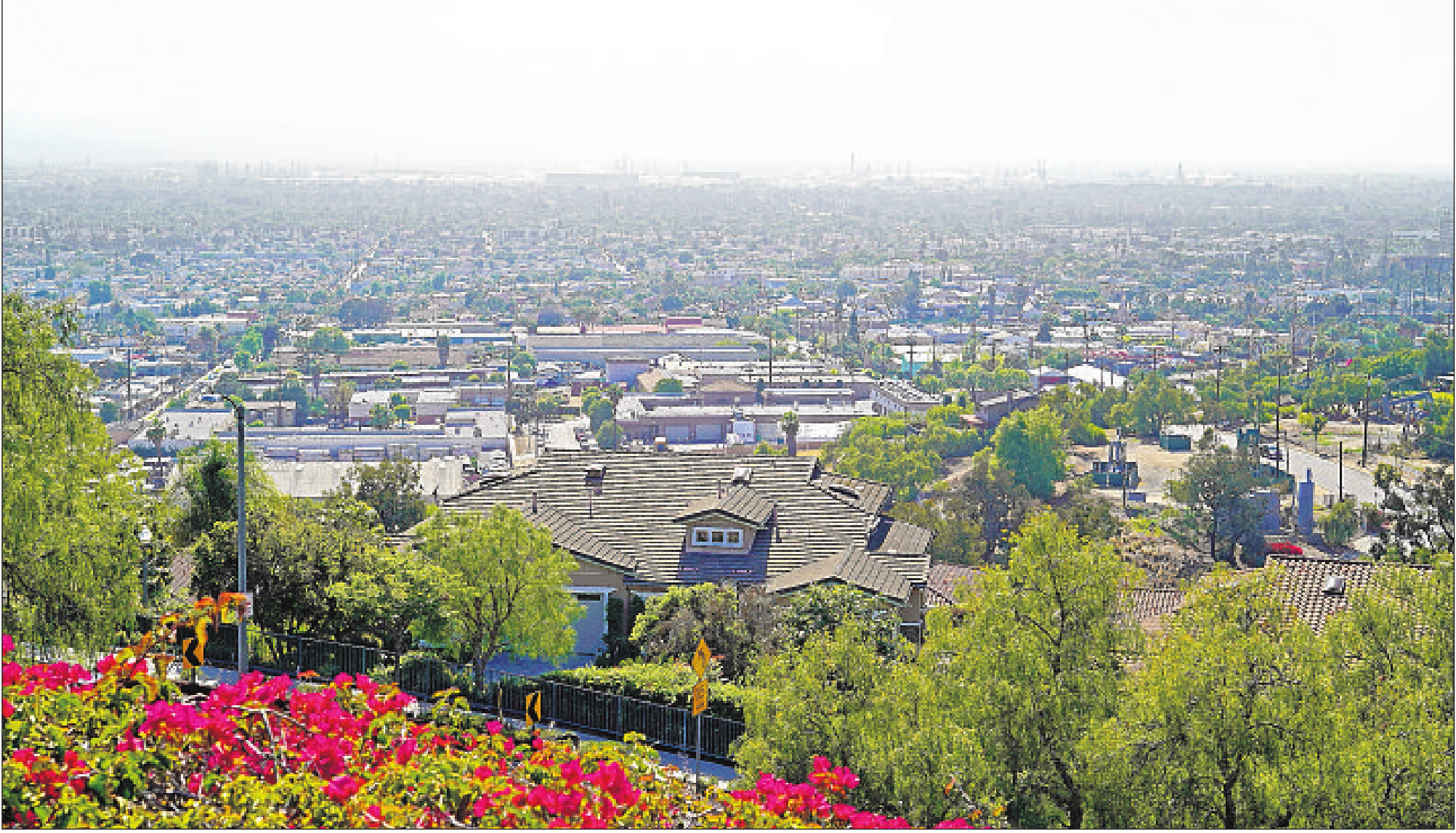
Neighborhood highlights From great heights: On clear days, the views from atop Signal Hill are some of the most breathtaking in the Southland.
Parks and arts: For
a city of its size, Signal Hill has quite a few parks, many of which
contain public artwork commemorating the city’s history.
Close to the action: Just
a short drive to Long Beach and its newly resurgent downtown, Signal
Hill offers small-town living near the heart of the city.
Neighborhood challenge Achanging city: The
roughneck legacy of Signal Hill is fading away as the city’s oil era
recedes deeper into the past, leaving some older residents feeling left
behind.
Expert insight
“Besides
the signal towers sitting at the top of the hill, Signal Hill is known
for its sweeping views from almost any location,” said real estate agent
Chayan Alavi.
He
added that Heritage Square, an 8-acre planned development that will
offer 60,000 square feet of retail space and 200 residential units,
should centralize the city’s nightlife. “Costco and Home Depot are as
elegant as it gets right now,” he said.
Signal
Hill has seen two development booms: one in the late ’80s and one after
the turn of the century. Alavi said that although the clear zoning
enforcement has given the city a clean, modern feel, it lacks the
history and architecture of some other areas.
Market snapshot In
the 90755 ZIP Code, based on four sales, the median sales price for
single-family homes in April was $598,000, down 0.4% year over year,
according to CoreLogic.
Report card Signal
Hill has no public schools within its boundaries, but there are eight
in the area. Of those, seven scored higher than 750 on the 2013 Academic
Performance Index.
Longfellow
Elementary scored the highest, at 876, Hughes Middle scored 846, and
Bryant Elementary scored 812. Polytechnic High scored 764.
hotproperty@latimes.com Times staff writer Jack Flemming contributed to this report.